|
|
The 360
Stories, studies, and trends shaping SRM this month
May 2026 |
|
|
 |
Photo: REUTERS |
|
Stardust – a for-profit SRM company – released details of its proposed particles and system for stratospheric aerosol injection (SAI). As the company outlines its vision for a pathway to deployment, we take a look at what the first ten years of solar geoengineering could look like. Join us on 26 May for a live discussion. Can't join live? Register to receive the recording.
Read on for more about Stardust, plus the most important developments across the field. |
| Read experts' reactions to Stardust's reveal |
|
|
New from SRM360 |
|
|
|
|
|
|
|
|
|
|
|
|
|
|
This month in SRM |
 |
Participants at the High-Level Technical Convening on Solar Radiation Modification (SRM), Accra, Ghana, in April 2026. Photo: The Degrees Initiative. |
|
|
Our read
Two of this month's biggest developments seemingly pulled in opposite directions. Stardust's papers, which have not been peer-reviewed, detailed a proposed pathway towards SAI deployment, while a UNEP working paper declared that "scientific evidence does not support SRM as a viable climate solution" – a notably firm headline. The body of the report is more measured, acknowledging the potential value of research for informed risk assessment and noting that "precaution does not mean inaction". How that tension between the topline framing and the report's more nuanced content lands with policymakers is worth watching as governance debates accelerate. |
|
|
Governments and global agencies engage
A new assessment from UNEP
The United Nations Environment Programme published a working paper stating that "scientific evidence does not support SRM as a viable climate solution", citing major knowledge gaps, governance challenges, and potentially significant environmental and social risks. The paper also calls for more discussion and assessment of SRM, while stressing that research should not distract from emissions reductions. It also highlights the importance of transparency and oversight.
The EU calls for a moratorium
EU ministers at a joint council meeting in Luxembourg approved a statement calling for a moratorium on SRM deployment, the application of the precautionary principle, and greater EU engagement in international governance discussions – including oversight of research. In a commentary, Centre for Future Generations' Giulia Neri suggested the EU should pair its proposed moratorium with stronger public investment in independent research and global governance frameworks.
India establishes an SRM working group
Indian Government policy think tank NITI Aayog has established a working group to assess SRM risks and develop a governance framework, as the country faces increasing challenges from extreme heat affecting its ageing population.
Ghana hosts SRM workshop
Ghana hosted a government workshop on SRM. The convening recognised the need for knowledge and capacity-building in the region, though participants noted that SRM would not tackle root causes of climate change, and deployment remains opposed by the African Group of Negotiators.
Building capacity for public engagement
On the topic of capacity-building, an open-access book by Jinnah et al. outlines three approaches to public engagement on SRM and provides briefing materials on its science, governance, and ethics. The authors stress the importance of broad, inclusive engagement – expanding beyond ideas of public acceptance and social licence.
UK and Italy face public pressure
The UK government responded to a parliamentary petition reaffirming it is not in favour of SRM deployment, but does support independent research. Meanwhile, in Italy a new "popular initiative" bill to ban the deliberate release of substances into the atmosphere has been filed and has collected over 20,000 signatures. Wired Italy reports that the bill has yet to gain political support, although if it receives 50,000 citizen signatures within 180 days it will be brought to Parliament.
Alternative approaches to SAI |
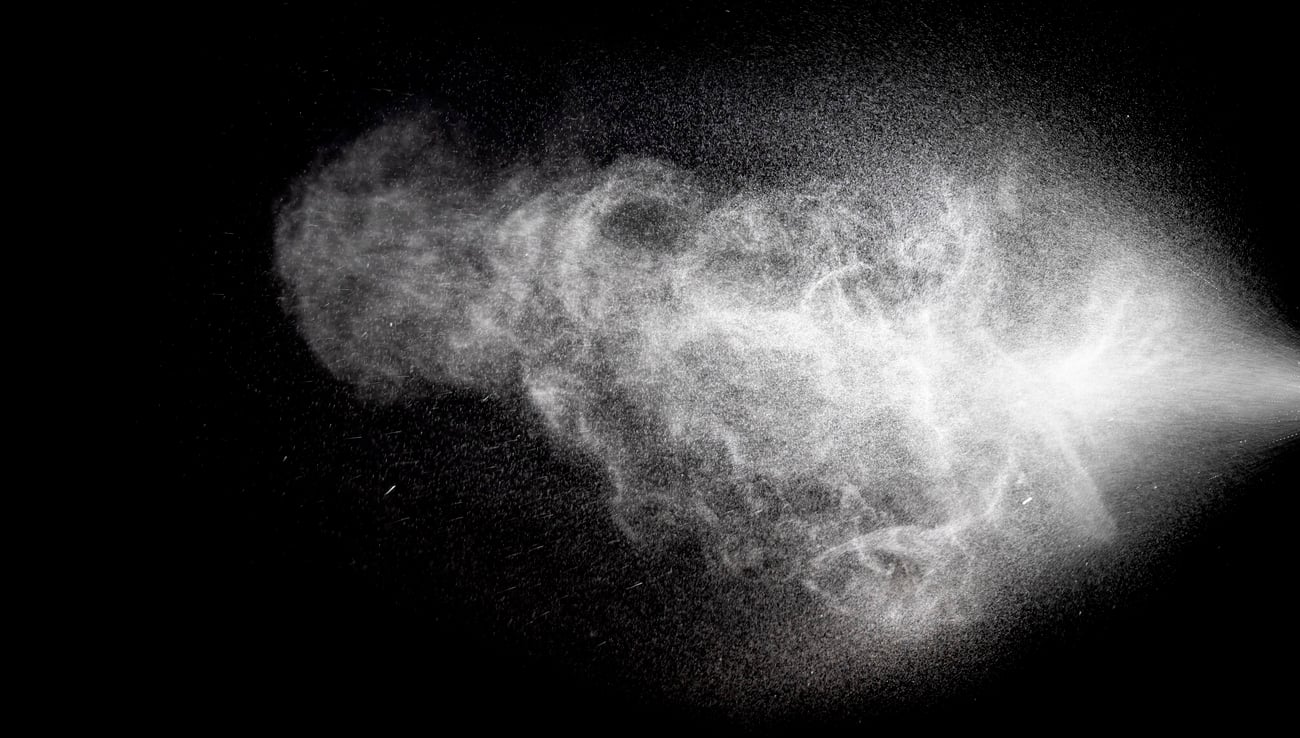 |
Photo: Jose A. Bernat Bacete |
|
|
|
Stardust Solutions, the US–Israeli company that has raised $75 million to develop SAI technology, published a series of scientific preprints revealing the makeup of its proposed particles: silica, optionally with a calcium carbonate core, positioned as alternatives to sulphates. Accompanied by an exclusive article in The New York Times, the preprints also detailed a dispersal method using high-pressure air and hydrophobic coatings, and proposed a particle "fingerprint" system for monitoring deployments.
Stardust is not alone in exploring alternative particles. A study by Kulmala et al. examined organic aerosols formed from molecules naturally emitted by plants, concluding that "organic SAI" could plausibly avoid some issues with sulphate-based approaches, though further research is needed.
And, as highlighted in the SRM360 Perspective linked above, Duffey et al. explored a lower-altitude approach to SAI that reduces technical barriers to deployment, finding it could be more efficient than previously thought – though trade-offs and uncertainties remain.
Research worth watching
A new approach to Arctic intervention
The new Arctic Stabilization Initiative launched with $6.5 million in initial funding towards a five-year, $55 million research programme focused on whether mixed-phase cloud thinning (MCT) could help preserve sea ice. MCT would involve thinning certain clouds to allow more heat to escape, especially in winter months at the poles. The non-profit plans to conduct outdoor experiments under a staged research plan with community engagement to avoid undue environmental damage and recognise Indigenous stakeholder views.
How would SAI affect ecosystems?
Parry et al. find that SAI could benefit the Amazon by increasing both plant growth and carbon storage, with models projecting increased global land carbon storage under SRM scenarios despite concerns that reduced sunlight and rainfall could harm vegetation productivity. Separately, Awo et al., investigating African marine ecosystems, find that SAI could stabilise temperatures, salt levels, and chlorophyll levels, while leaving ocean acidification and oxygen losses in deeper waters unaddressed.
Pollution from satellite launches as unintentional geoengineering?
A UCL-led study finds that pollution from the rapidly growing satellite megaconstellation industry is accumulating in the upper atmosphere, slightly decreasing sunlight reaching Earth's surface. By 2029, the researchers estimate, the effect could be comparable to "a small-scale, unregulated geoengineering experiment that could have many unintended and serious environmental consequences", as lead researcher Professor Eloise Marais put it.
Upcoming events
Stay informed about SRM workshops, webinars, and conferences. |
| Browse events |
|
|
 |
|
Follow our updates and subscribe to our weekly insights. |
|
|
Thank you for reading. |
|
Receive this newsletter from a friend and want it in your inbox? Subscribe. |
| Share your feedback |
|
|
|
|
|
|