Share
Examining SRM claims + this month's biggest stories
 ‌ ‌ ‌ ‌ ‌ ‌ ‌ ‌ ‌ ‌ ‌ ‌ ‌ ‌ ‌ ‌ ‌ ‌ ‌ ‌ ‌ ‌ ‌ ‌ ‌ ‌ ‌ ‌ ‌ ‌ ‌ ‌ ‌ ‌ ‌ ‌ ‌ ‌ ‌ ‌ ‌ ‌ ‌ ‌ ‌ ‌ ‌ ‌ ‌ ‌ ‌ ‌ ‌ ‌ ‌ ‌ ‌ ‌ ‌ ‌ ‌ ‌ ‌ ‌ ‌ ‌ ‌ ‌ ‌ ‌ ‌ ‌ ‌ ‌ ‌ ‌ ‌ ‌ ‌ ‌ ‌ ‌ ‌ ‌ ‌ ‌ ‌ ‌ ‌ ‌ ‌ ‌ ‌ ‌ ‌ ‌ ‌ ‌ ‌ ‌ ‌ ‌ ‌ ‌ ‌ ‌ ‌ ‌ ‌ ‌ ‌ ‌ ‌ ‌ ‌ ‌ ‌ ‌ ‌ ‌ ‌ ‌ ‌ ‌ ‌ ‌

View this email in your web browser.

The 360

Stories, studies, and trends shaping SRM this month

January 2026

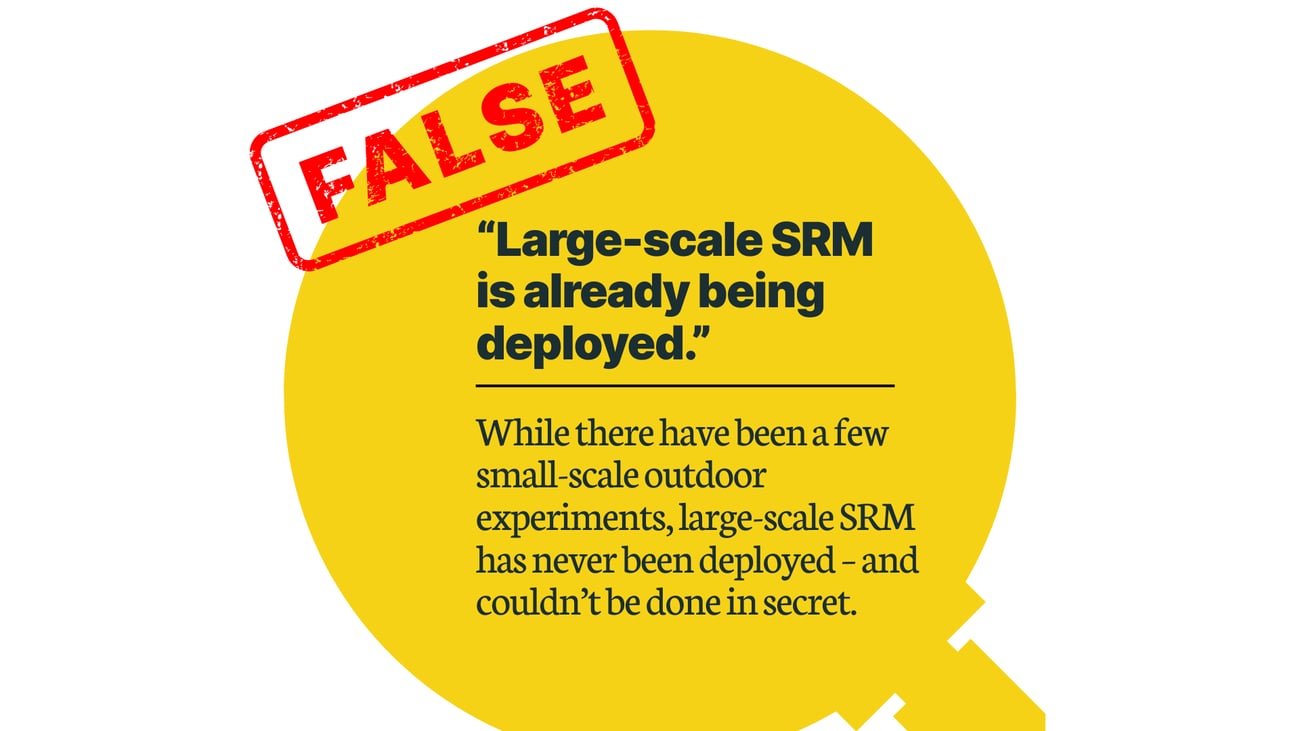
Solar geoengineering raises questions across science, ethics, and geopolitics – creating space for confusion and misinformation. Our new Under the Lens series examines some of the most common claims about SRM. Explore what the evidence shows – and read on for January's biggest developments in the field.

Explore the claims

New from SRM360

SRM & Corals


Explore the primer.

Live Discussion: Could Solar Geoengineering Help Protect Coral Reefs?


Register for next week's discussion.

What Does Trump’s Withdrawal From Climate Organisations Mean for SRM?


Read the news reaction.

“Make Sunsets” in Mexico: Lessons for SRM Governance


Read the perspective.

This month in SRM

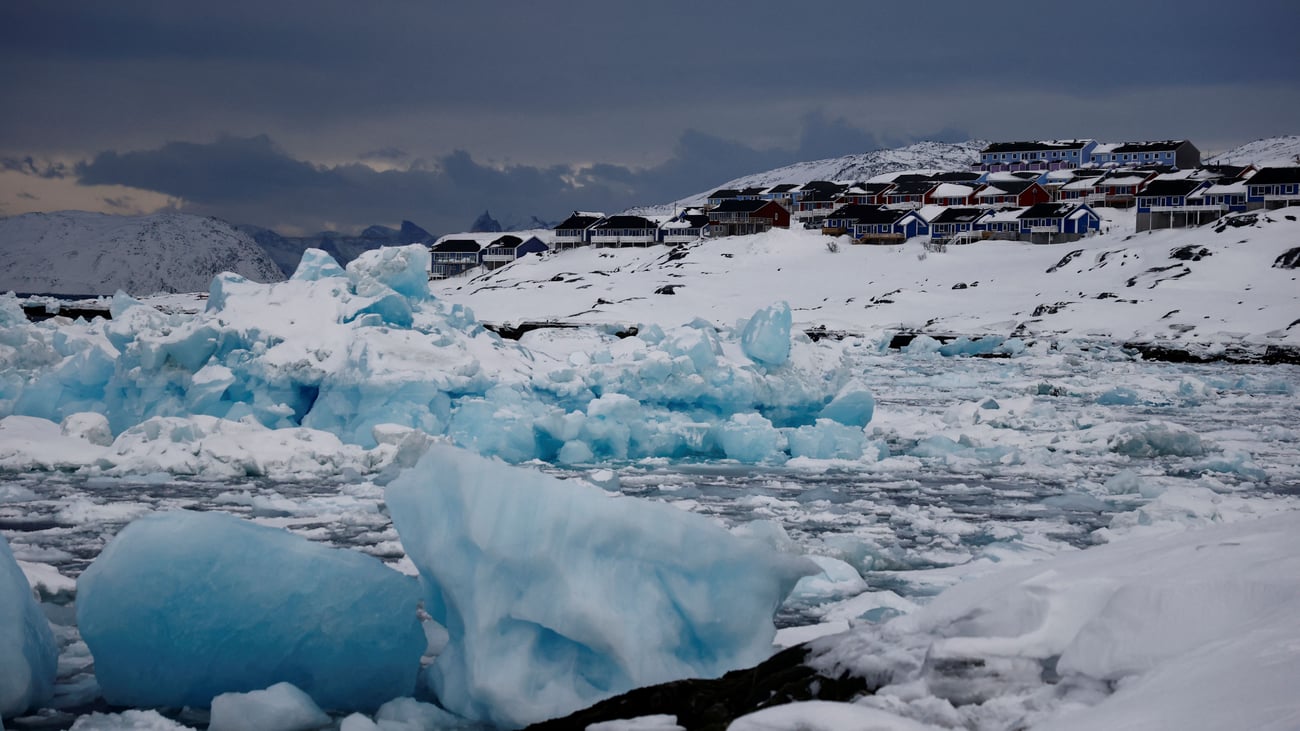
Ice floats in front of houses in Nuuk, Greenland. REUTERS / Sarah Meyssonnier

Our read


The Arctic has taken centre stage in this month's news – and remains a critical part of the SRM conversation. As a new era of Arctic geopolitical competition unfolds amid a fast-changing climate, the region presents both global risks and (for some) potential economic opportunities. SRM could change that equation in significant ways; understanding its potential role and impacts has become more pressing than ever. 

The Arctic in focus


Arctic warming is not an economic opportunity

ARC's Eirini Malliaraki, Nick van Osdol, and Charlotte DeWald argue that treating Arctic warming as an economic opportunity is a catastrophic miscalculation. The Arctic's climate-regulation functions – cooling the planet, stabilising circulation, and storing vast amounts of carbon – are far more valuable than gains from shipping routes or resource extraction.


Marine cloud brightening (MCB) could maintain Arctic sea ice

Henry et al. investigate MCB deployment to cool the Arctic using three Earth System Models. They find MCB could maintain Arctic sea ice without significant climate impacts outside the region, though the study doesn't consider technical feasibility.


We discussed whether solar geoengineering could help Arctic sea ice – and what new risks it could introduce – in our September 2025 live discussion. Watch the recording.


The Guardian series: making the case for research


In a recent opinion series, Dakota Gruener and Daniele Visioni advocated for responsible research, including field experiments rolled out slowly and cautiously, similar to medical trials. Brent Minchew and Colin Meyer discussed glaciers and sea level rise, arguing that technological approaches need exploration. Ines Camilloni emphasised transparency and inclusion in decision-making, recognising Global South engagement doesn't mean endorsement of deployment. Craig Segall and Baroness Bryony Worthington called for knowing our options rather than banning research.


We covered this series in depth in our weekly LinkedIn newsletter, Reflections. Read the most recent edition and subscribe to stay in the loop.


Risk framing and governance gaps


SRM positioned as emergency risk-management 

A new University of Exeter report warns policymakers and financial institutions are systematically underestimating climate risks. In its proposed "Planetary Solvency" recovery plan, the report includes SRM research as part of an emergency toolkit, noting aerosol pollution has already masked around 0.5°C of warming. The authors call for urgent research and informed debate on SRM alongside rapid emissions reductions, greenhouse gas removal, and large-scale restoration of natural systems.


French Academy of Sciences: stop advancing SRM deployment

In a new interview with The Conversation, scientist Laurent Bopp outlines the French Academy of Sciences’ recommendation to block SRM deployment, citing concerns about termination shock, governance failure, and the risk that large-scale research funding could legitimise premature use. The Academy suggests exploring an international treaty prohibiting SRM deployment.


UNEA-7: SRM discussed, informally

The issue surfaced in informal discussions among civil society, youth groups, scientists, and policymakers, according to DSG. However, Operaatio Arktis noted that delegations and the public remain largely unaware of SRM research, creating power imbalances. CIEL suggested the African Group of Negotiators may have advanced discussions on a non-use agreement on the sidelines.


Governance challenges at odds with political realities

Estrada et al. analyse governance challenges, identifying a narrow pathway to beneficial deployment, requiring strong emissions cuts, very low risk of abrupt termination, and gradual phase-out – conditions they argue are at odds with current sociopolitical realities.


Private sector investment and motivations

Getty Images / Nuthawut Somsuk

What's driving venture capital into SRM startups?

E&E Politico profiled venture capitalist Finn Murphy, whose firm is backing Stardust Solutions. Murphy said he hopes SRM won't be needed, describing global warming as both a human tragedy and a technical challenge with potentially profitable solutions. The article explores investment into Make Sunsets' “cooling credits” and Earthguard's sunlight deflectors.


Stardust co-founder: "Irresponsible” not to prepare

The Independent highlighted Stardust co-founder Yanai Yedvab, who said it would be "irresponsible" not to prepare intervention options for governments facing an escalating climate crisis. He emphasised the company views governments as their only future market, with all deployment decisions remaining in governmental control.


Want to explore the SRM funding landscape further? Check out our Funding Tracker to see who contributed and received solar geoengineering funding between 2007 and 2024. We'll be updating the tracker with 2025 information later this year.


Research advances: deployment strategies and impacts


Mid-latitude MCB could be more effective

Hirasawa et al. find that deploying marine cloud brightening in mid-latitudes would produce stronger and more evenly distributed cooling than deployments closer to the equator, reducing some negative impacts found in other studies.


How climate interventions affect marine life

Roberts et al. review the effects of SRM and carbon dioxide removal on marine ecosystems, finding these interventions present trade-offs between reduced warming-driven impacts and risks to food systems and biodiversity.


Upcoming events


Stay informed about SRM workshops, webinars, and conferences.

Browse events

Follow our updates and subscribe to our weekly insights.

Thank you for reading.

Receive this newsletter from a friend and want it in your inbox? Subscribe.

Share your feedback

Email Marketing by ActiveCampaign