|
|
The 360
Stories, studies, and trends shaping SRM this month
June 2026 |
|
|
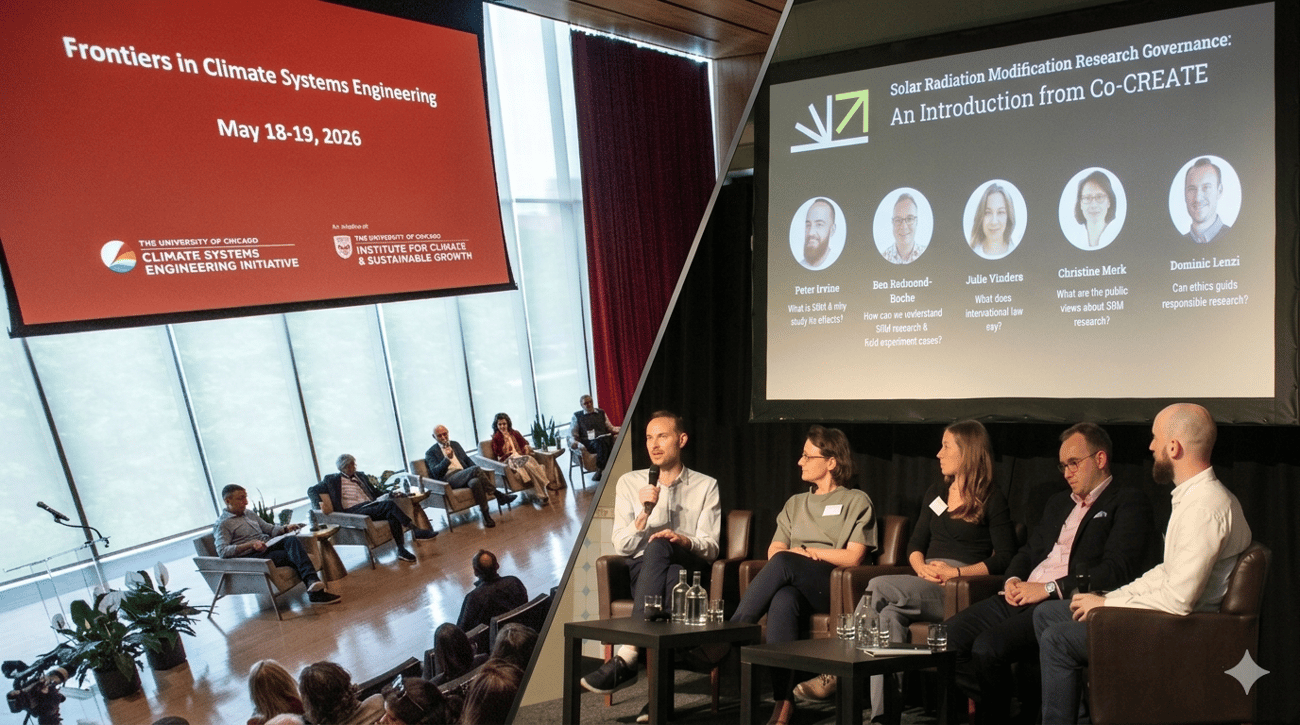 |
Photos: Lloyd Degrane; Climate Strategies Benedetto Valentini |
|
SRM conferences in the US and the EU highlighted striking differences in approach to research, development, and policy. As the debate grows, we’re hosting a live discussion to explore how research should be governed, and by whom. Register here to join us on 30 June or receive the recording. |
| Read our report on the transatlantic divide |
|
Read on for the most important developments from across the field. |
|
|
New from SRM360 |
|
We’re pleased to welcome Mark Hilton, George Marshall, Manuel Pulgar-Vidal, and Jesse Reynolds to SRM360’s Board of Directors, where they’ll join returning board member Dakota Gruener in shaping the strategy that drives informed engagement around solar geoengineering. Learn more about our board members.
We’re also immensely grateful to Board Alumni Larry Birenbaum and James Lawler for their leadership in helping to launch SRM360. |
|
|
|
|
|
|
University of Chicago SAI Essay Contest
Read different takes from the first- and second-place winners, Zilin Xiang and Amara Nwuneli. |
|
|
|
|
|
|
|
|
This month in SRM |
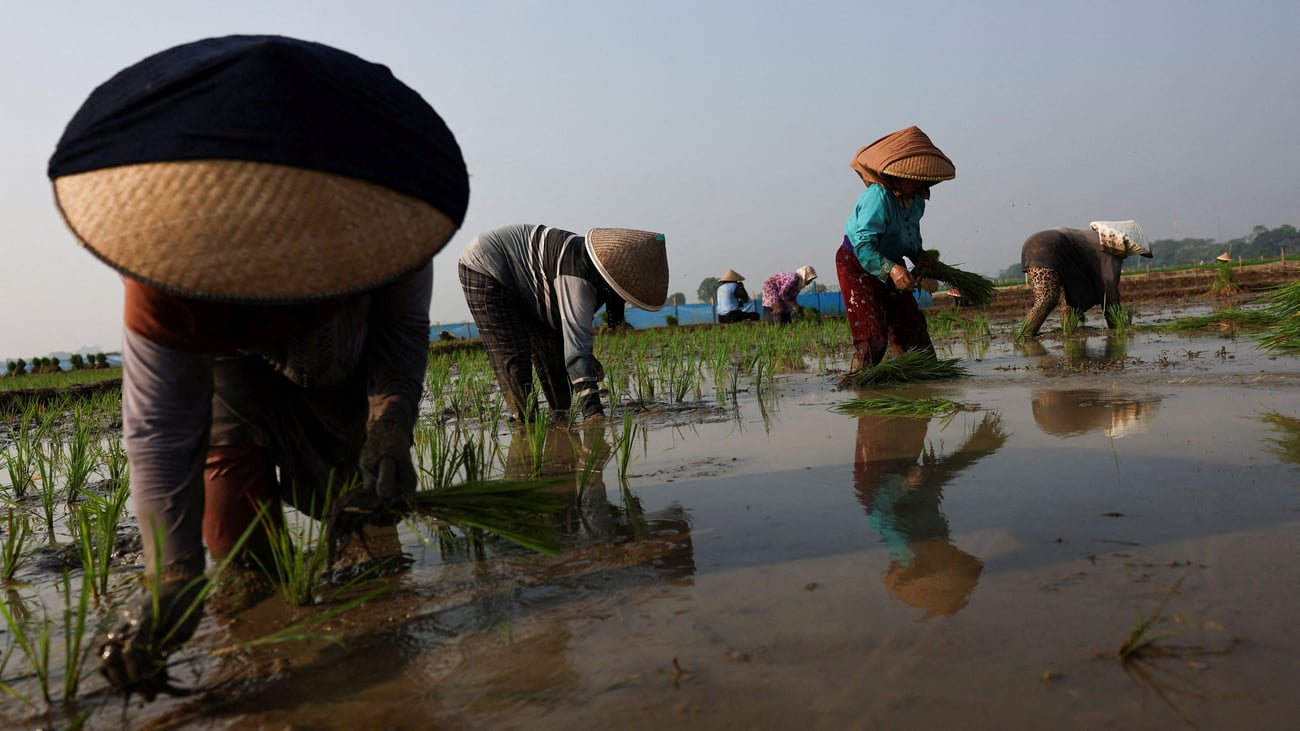 |
The Indonesian government urged farmers to plant rice plots early to prepare for a looming El Niño dry spell. REUTERS/Willy Kurniawanin |
|
|
Our read
Against the backdrop of concerning climate signals, the range of actors engaging with SRM this month is striking. The EU Parliament’s think tank, G7 science academies, the UK public, US Republican lawmakers, and researchers across the Global South all weighed in – from very different starting points – engaging with questions of how SRM research and governance should proceed. |
|
|
A hotter, less stable world
Earth’s energy imbalance hits a new record
The Indicators of Global Climate Change 2025 report found that Earth’s energy imbalance – the difference between incoming solar energy and energy radiated back into space – is now at a record high. As noted in an explainer from Spark Climate Solutions, the Earth is reflecting substantially less sunlight than it did 25 years ago, due to reductions in cloud, snow, and ice cover, combined with a clean-up of particulate air pollution.
El Niño is here – and could intensify
The US National Oceanic and Atmospheric Administration (NOAA) has confirmed that El Niño has begun in the tropical Pacific after ocean temperatures rose sharply. Forecasts suggest this could become a “super” El Niño, bringing record temperatures and extreme weather. There are also concerns that a “blob” of warm water in the North Pacific that has been forming for months could amplify the impacts of El Niño, with effects expected to last into 2027.
New generation of climate simulations under way – including SAI simulations
To help assess the evolving risks of climate change, the next round of coordinated climate model simulations – CMIP7 – is under way, and will help inform the next IPCC report. As part of this effort, new coordinated simulations of SAI deployment are also being studied, as detailed in a paper by Lee et al. Compared to previous simulations, researchers found notably improved consistency, suggesting greater confidence in some results, though significant uncertainties remain, particularly over SAI’s impacts on tropical rainfall.
Governance engagement widens |
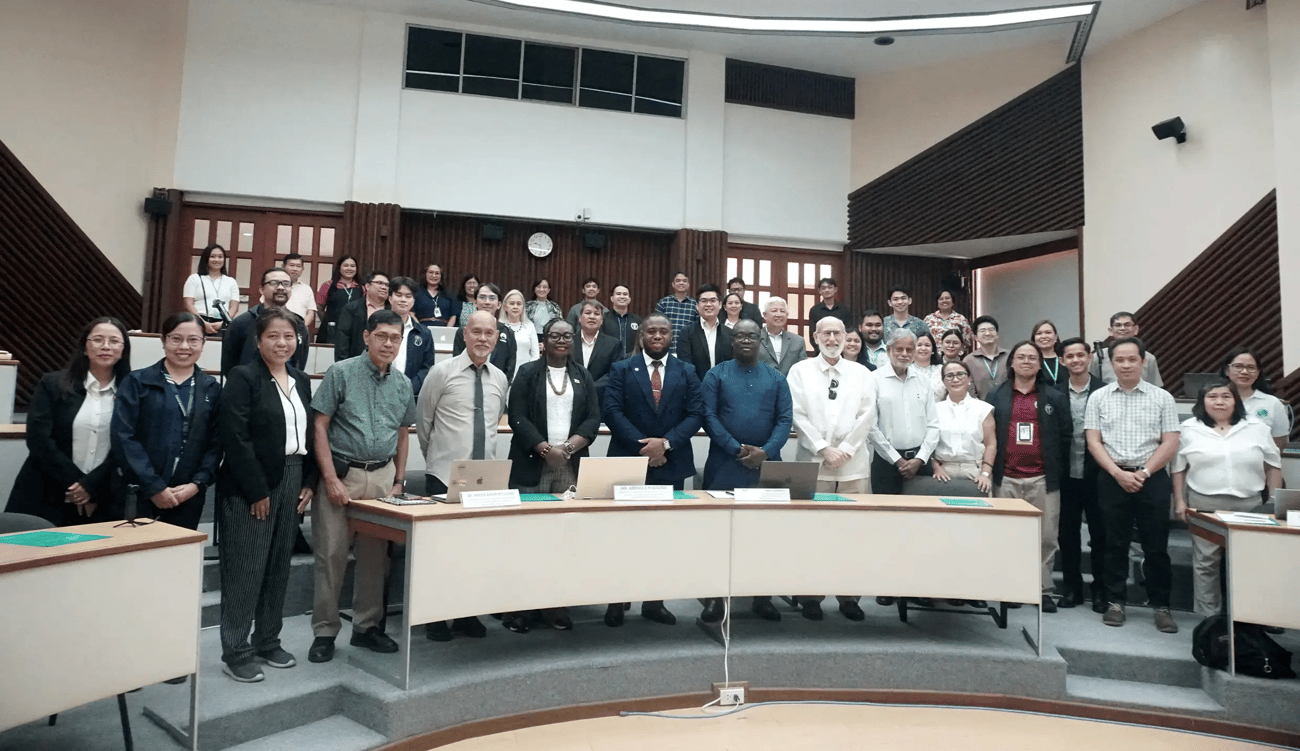 |
Stakeholders gather at the University of the Philippines Los Baños to discuss SRM governance. Photo: University of the Philippines Los Baños |
|
|
|
The European Parliament briefed on SRM
The European Parliament’s research service published a briefing on options for the responsible governance of SRM research. The explainer for policymakers covers the current science and governance frameworks for SRM and reinforces support for the application of the precautionary principle.
UK public dialogue finds support for modelling – but concern about deployment
A public dialogue funded by the UK’s Natural Environment Research Council found strong support for computer modelling research on SRM among the UK public. However, concerns were raised about outdoor experiments, deployment, and governance.
G7 science academies issue Arctic statement
The S7 – the science academies of the G7 countries – issued a joint statement on the Arctic that includes an analysis of climate geoengineering methods. The assessment concludes that deployment or large-scale outdoor experiments should be avoided, with more research required to assess potential risks, alongside the development of inclusive, cross-border governance frameworks.
Workshops and capacity-building across the Global South
SRM was the focus of several recent workshops across the Global South. COMSATS University Islamabad held a discussion focused on increasing regional understanding of climate intervention technologies in the context of increasing climate vulnerabilities.
The Degrees Initiative supported a workshop convened by University of the Philippines Los Baños, bringing together stakeholders and policymakers from the Philippines and Ghana to share views and regional research projects.
Seven Global South research teams also received expanded SRM grants from the Degrees Initiative, aimed at supporting longer-term, complex research on how climate change and SRM could affect regional impacts. And Emerging Climate Frontiers launched a new fellowship for early-career researchers in Africa whose work covers carbon dioxide removal or solar radiation modification.
US Republicans request geoengineering oversight briefing
Republican lawmakers sent a letter to NOAA raising concerns over the oversight of cloud brightening and other solar geoengineering experiments. The letter requested a briefing on progress since a February Government Accountability Office report that recommended NOAA strengthen its oversight of weather modification activities.
Considering future generations in SRM governance
A perspective piece by the Centre for Future Generations argues that policymakers should embed the interests of those not yet born into SRM governance through dedicated representation, long-term foresight, and impact assessments that consider both the risks of action and inaction.
Outdoor experiments in focus |
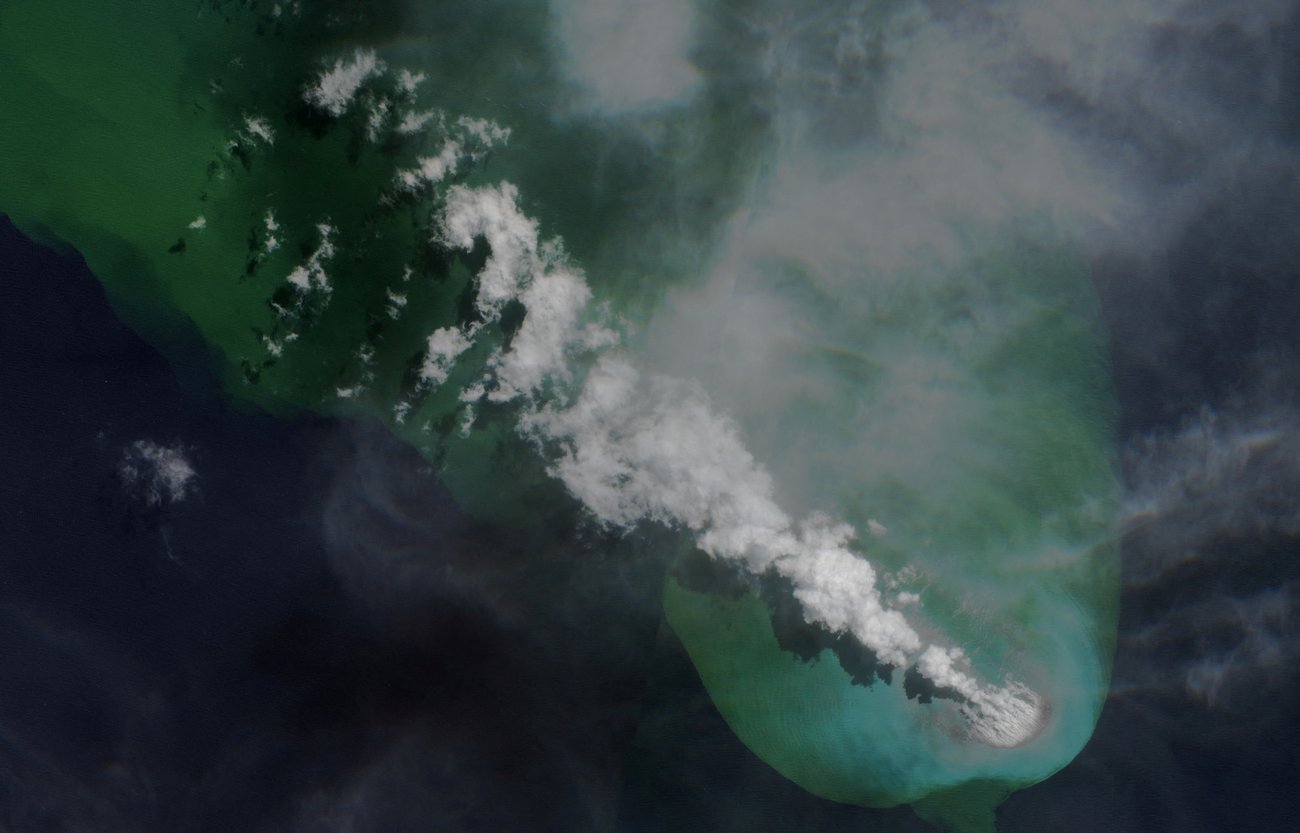 |
A satellite image shows volcanic plume rising over the vicinity of a submarine volcano in the Bismarck Sea, Papua New Guinea. Existing weather satellites such as this would detect any large scale SRM tests or deployment before any climate impact. Photo: REUTERS |
|
Two recent companion papers discuss outdoor SRM experiments. One, by Hernandez-Galindo et al., reviews past experiments, analysing both technical and sociopolitical aspects. The other, by Redmond Roche et al., looks ahead, assessing a range of possible future outdoor experiments for different methods and the legal and governance challenges posed by different scales of activity.
Another study explores the detectability of theoretical secret SAI experiments and deployment. Smith et al. find that small-scale outdoor experiments with negligible climate impacts could be conducted in secret, but larger tests and deployment would be spotted – both through environmental observation satellites and satellite imagery of ground infrastructure – long before any climate impact.
Early results from an Arctic sea ice thickening experiment
In the Canadian Arctic, Real Ice – funded by the UK's Advanced Research and Invention Agency – reported early results from a sea ice thickening experiment. The team pumped seawater onto the ice surface during winter, achieving roughly 50 cm of additional thickness, with satellite imagery showing the treated area retaining its higher reflectivity into the melt season.
Research worth watching
A feature in MIT Technology Review profiles the practical engineering research now under way at the University of Chicago’s Climate Systems Engineering initiative, from high-altitude aircraft design to stratospheric particle chemistry to monitoring infrastructure – work aimed not at deployment itself, but at understanding what deployment would require.
Could SAI’s cooling effect be countered?
Jones et al. investigate the efficacy of countering SAI with "stratospheric aerosol scrubbing", where another particle is injected to remove the sulphate particles used for SAI from the stratosphere. They find that injecting the same amount of scrubbing material as deployment material could reduce SAI’s cooling effect by about 30%.
SAI and monsoon rainfall
The potential effects of SAI on monsoons are a long-standing concern. Three recent papers explored this topic using computer models. Wilson & Bala find that SAI deployed to stabilise temperatures would decrease summer monsoon rainfall in India by about 10%, compared to the 14% increase they found for climate change in their modelled scenario. Kallihosur & Bala highlight tropical trade-offs associated with deploying SAI only in the winter hemispheres, finding a beneficial increase in summer monsoon rainfall but a detrimental decrease in winter rainfall. Jiang et al. find that SAI could reduce heavy rainfall in monsoon regions while increasing rainfall in nearby dry regions – a shift that could reduce rainfall extremes but create new regional risks.
How would SAI affect plane passengers?
Two recent studies have explored aspects of SAI’s effects on aviation. Ko et al. find that SAI could significantly reduce plane turbulence, which is expected to rise due to changing atmospheric circulation under global warming, with implications for passenger safety. Robock et al. find that lower-altitude forms of sulphate-based SAI could increase passenger exposure to these particles, though concentrations would remain within air quality guidelines on average in their simulations.
SAI as a status symbol
In a new paper, Joshua Horton discusses the potential for SAI to function as a status symbol, similar to the role space programmes have played in the past as signals of a country’s power. Read our latest edition of Reflections on LinkedIn for more on this paper.
Upcoming events
Stay informed about SRM workshops, webinars, and conferences. |
| Browse events |
|
|
 |
|
Follow our updates and subscribe to our weekly insights. |
|
|
Thank you for reading. |
|
Receive this newsletter from a friend and want it in your inbox? Subscribe. |
| Share your feedback |
|
|
|
|
|
|