|
|
|
December 2025 Update
Dear ,
We launched SRM360 just over a year ago with a simple goal: to help people make sense of solar geoengineering by providing clear, accessible information. Since then, we've learned a lot about what resonates – and what doesn't.
Turns out, people want more than just the science. Our most-read content this year? Tracking who's funding SRM research, which US states are banning it, and what outdoor experiments are actually happening. The landscape matters as much as the mechanics.
We've also learned that conversations need to start upstream: helping people understand how serious climate impacts are becoming, and how far current policies are falling short. Without that foundation, SRM remains an abstract – and often alarming – idea.
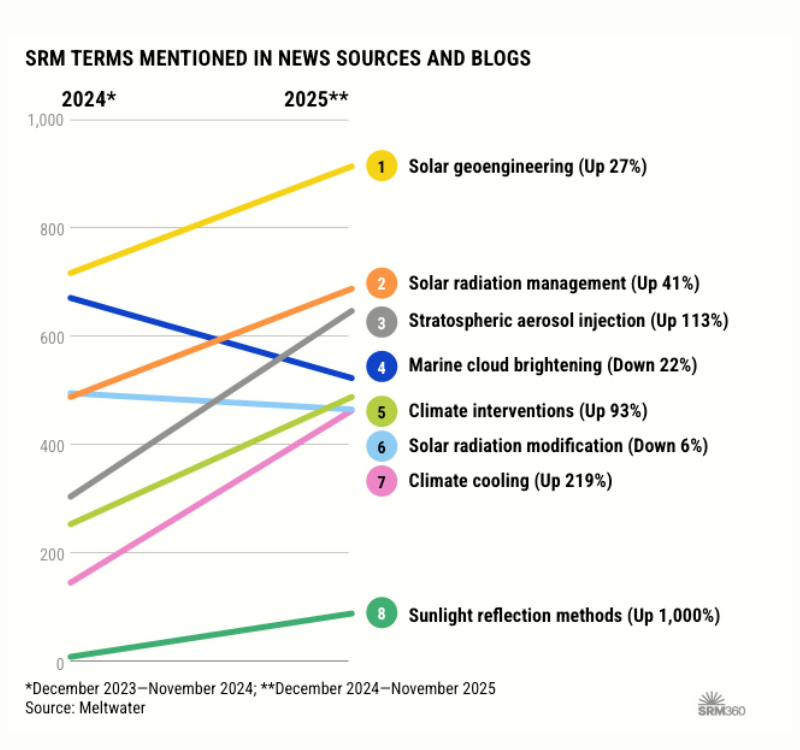
Below, our Co-Founder Mark Turner shares five insights from our first year – from understanding what makes people open to considering SRM in the first place, to how new terminology is reshaping the conversation.
Also in this edition: New studies find that stratospheric aerosol injection (SAI) could reduce the risk of most climate tipping points and could offset climate change’s impact on the Asian monsoon and on South Atlantic storms. Make Sunsets also received its first US patent for a stratospheric cooling system.
Read Mark's full reflection, catch up on the latest developments, then let us know: What do you want to see from SRM360 in 2026?
-The SRM360 Team |
|
|
New From SRM360 |
|
|
 |
|
What resonates when communicating about solar geoengineering? We reflect on a year of tracking what works – and what doesn't.
|
|
|
|
|
|
|
SRM Academic Highlights |
 |
Getty Images/Richard Drury |
|
SAI could help avoid tipping points
A study by Zhao et al. investigates how SAI would affect 14 tipping points, including ice sheets, coral reefs, and the Amazon. They find that balanced deployments of SAI could reduce risks for almost all the tipping points they analysed. They also explore how different deployment scenarios lead to different effects on tipping points.
SAI could offset the effects of climate change on the Asian monsoon
There is a widespread concern that SAI would substantially weaken the Asian monsoon, causing significant harm to the region. However, in a new study using the latest climate model simulations of SAI, He et al. challenge this, finding that SAI (deployed at the equator) could offset the strengthening of the Asian monsoon expected under climate change rather than causing additional drying.
How would SAI affect southern hemisphere cyclones?
Under global warming, high-latitude cyclones (storms) are expected to become more intense. Ribeiro et al. find that SAI would weaken high-latitude cyclones in the southern hemisphere, reducing their rainfall and wind speeds, and offsetting the effects of climate change.
SAI and malaria transmission in South Asia
Climate change could speed up the early life cycle of mosquitoes and increase how often they bite, worsening the spread of malaria. In their study, Hussain et al. find that SAI would reduce malaria transmission across South Asia, though a few regions could see localised increases. |
| UPCOMING EVENTS |
|
|
Community News and Events |
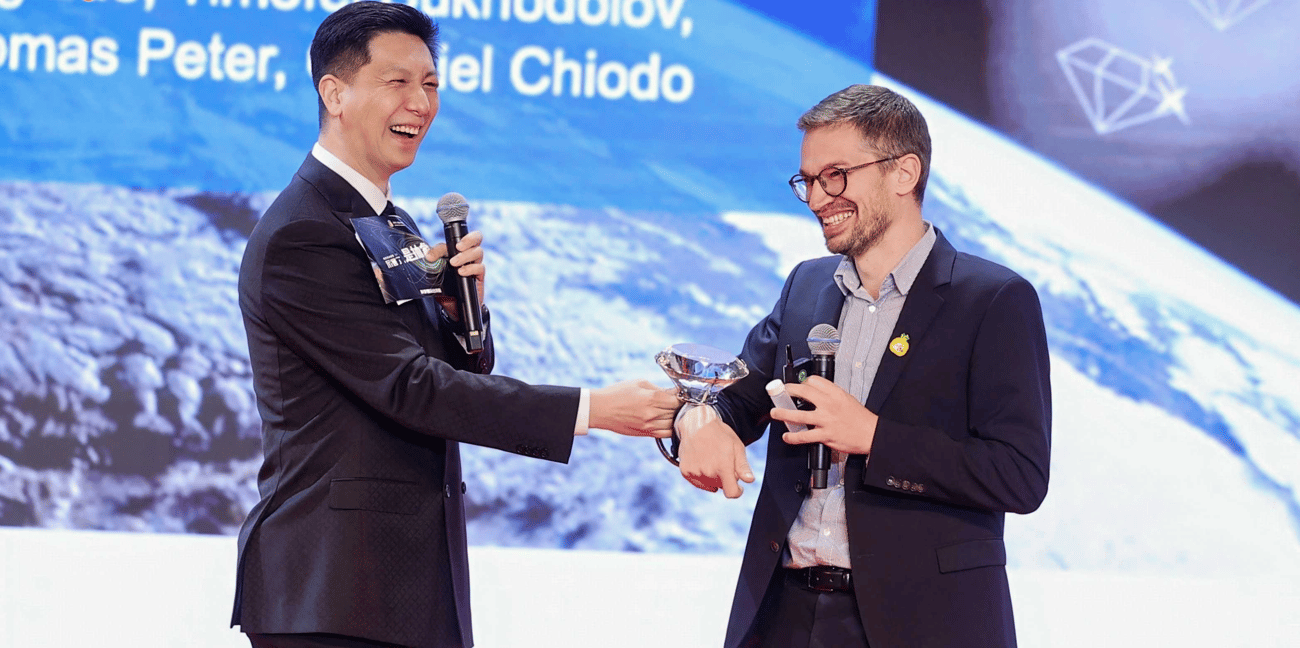 |
Sandro Vattioni accepts the Pineapple Science Award in Hangzhou, China. Photo Credit: Sandro Vattioni / ETH Zurich |
|
US Patent for Stratospheric Cooling System
Make Sunsets has received its first US patent for a balloon-based stratospheric aerosol delivery system. In a blog post, the company said it will use the patent not to block others but to offer open, irrevocable licences for any organisation deploying under one ton per year.
Diamond dust geoengineering wins Pineapple Science Award
Sandro Vattioni received the award for his ETH Zürich team's research on whether “diamond dust” could be used to cool the planet. China’s Pineapple Science Award (similar to the IgNobel prize) celebrates studies that sound eccentric but probe real scientific and policy-relevant questions.
Pakistan workshop considers SRM’s role in climate–health action
A recent workshop at COMSATS University Islamabad (CUI) warned that Pakistan’s health systems are not prepared for rising climate risks, including worsening heat stress, driving the need for responsible research into interventions. Co-hosted with the Alliance for Just Deliberation on Solar Geoengineering (DSG) and the Directorate of Malaria Control, and supported by the Degrees Initiative, the meeting brought together policymakers, climatologists, malaria experts, and governance specialists.
Connecting bioethics and sunlight reflection
A new commentary argues that SRM creates ethical challenges that affect both health and the environment. Questions include equity and justice regarding uncertainties and unintended consequences. The Nuffield Council on Bioethics writes that ethics must address “engagement across a fragmented array of societal, governmental, and other parties”. |
|
|
|
|
|
In the Media |
 |
Getty Images/PrathanChorruangsak |
|
SRM reaches new audiences through podcast conversations
Solar geoengineering appeared on several notable podcasts recently, spanning climate activism, policy analysis, psychology, and governance. These conversations wrestle with both SRM’s profound risks and the reality of accelerating climate impacts, rather than jumping to conclusions. Multiple hosts and guests frame solar geoengineering as tragic – not because it is inherently problematic, but because we’re here at all, discussing what Cynthia Scharf calls “technologies of desperation”. Read our full roundup in Reflections, our weekly LinkedIn newsletter.
Billionaires drive headlines on “dimming the sun” as Gates weighs in
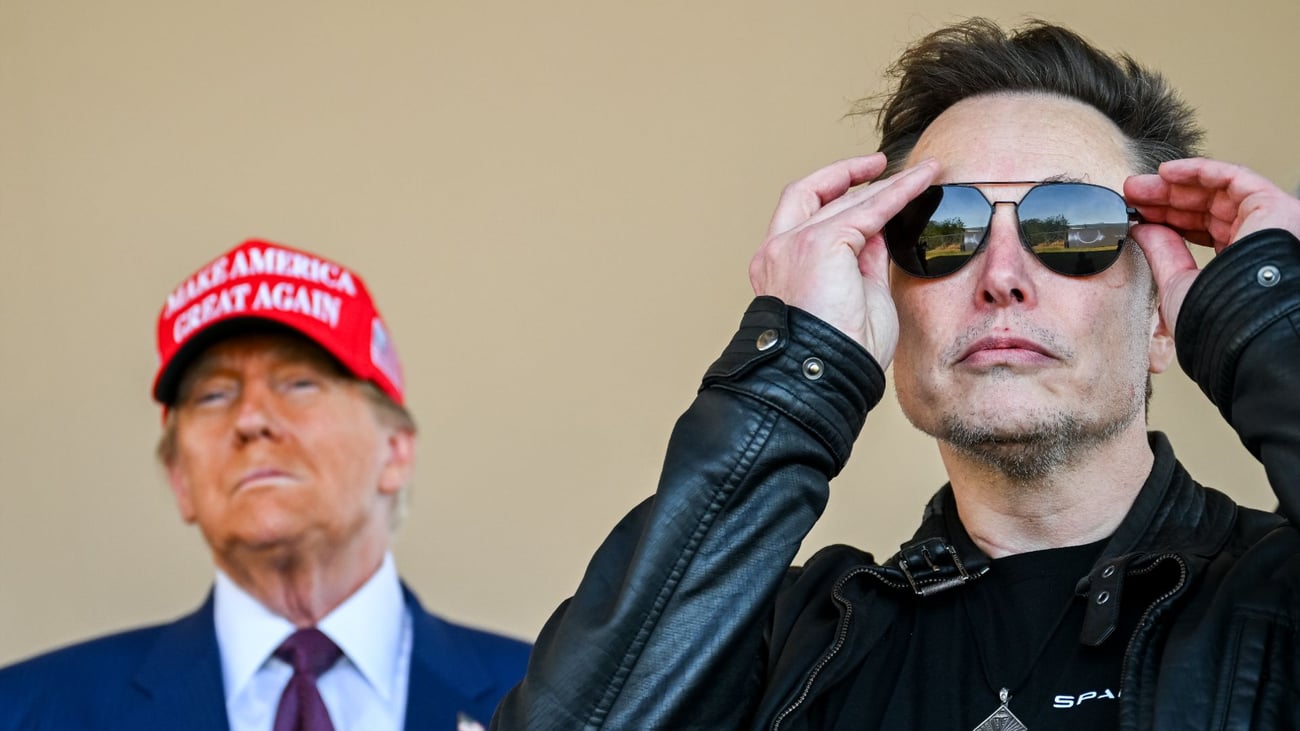
Following a flurry of news articles reporting on a tweet from tech billionaire Elon Musk, Bill Gates weighed in on the SRM conversation. The Microsoft co-founder and philanthropist said he would support climate interventions under scenarios where tipping points are reached, as Axios reports. Gates emphasised that he supports “valuable” research but is not pushing for deployment.
Stardust triggers security concerns over private-sector intervention
Media attention around Stardust’s $60 million funding round continued, with coverage in The New Yorker, The Washington Post, and MIT Technology Review. Private interest in initiatives like Stardust brings attention to the current lack of global governance and fuels concerns surrounding control or potential unilateral deployment. An opinion piece in Just Security emphasises that, without global agreements, private actors could trigger security risks from potential unregulated atmospheric interventions.
|
|
|
 |
|
Our community is engaging in meaningful SRM conversations on LinkedIn. Follow our updates and join the discussion there. |
|
|
|
Want even more SRM content?
Manage your subscription preferences.
Receive this newsletter from a friend and want it in your inbox?
Subscribe. |
|
|
| SHARE YOUR FEEDBACK |
|
|
 |
Copyright (C) 2025 SRM360. All rights reserved. |
|
|