|
|
|
November 2025 Update
Dear ,
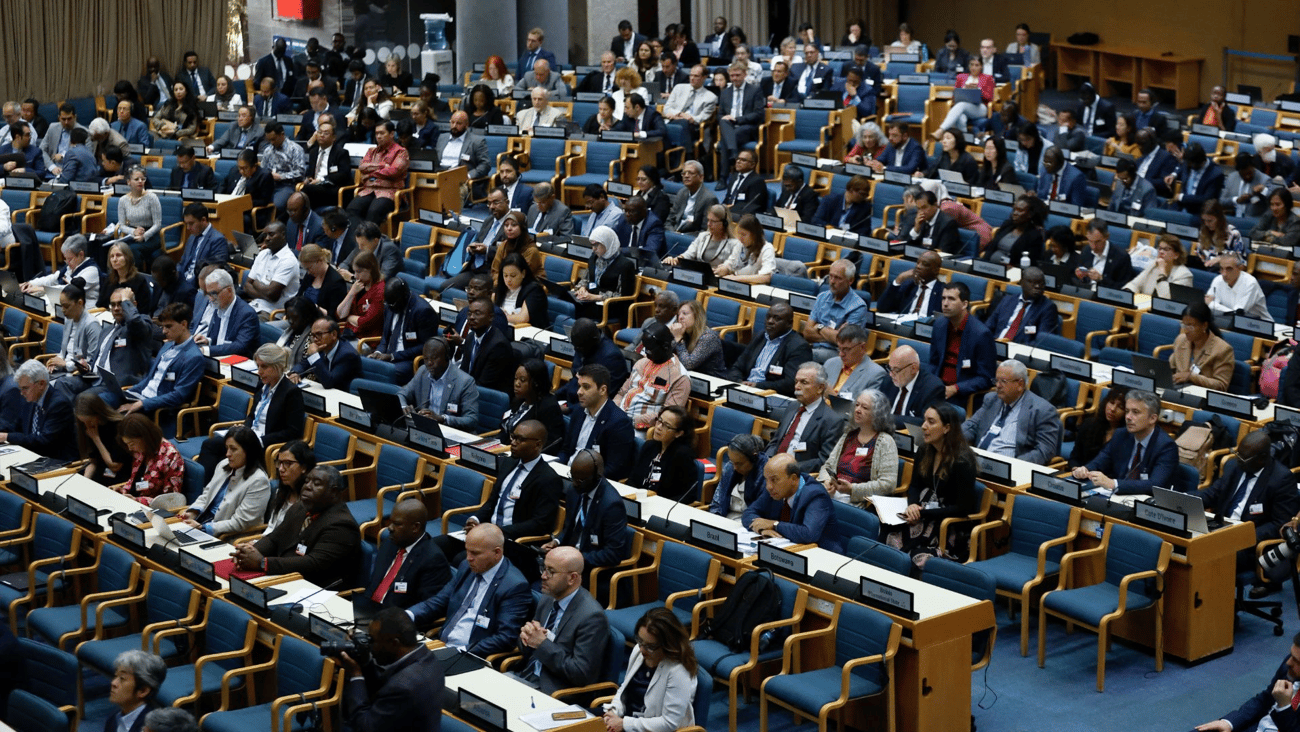
Solar geoengineering entered the spotlight this month, though not at COP30. As governments at the conference grapple with the inevitable prospect of climate overshoot, the SRM debate is largely absent beyond a few side events.
But elsewhere, the conversation spiked after Elon Musk tweeted about an “AI satellite constellation” to reflect sunlight, and Tucker Carlson jumped on the chemtrails bandwagon, garnering millions of views. Both events underline a rapidly evolving attention economy, where a few highly influential individuals can steer the conversation faster than most governments can respond.
Stardust announced $60 million in additional funding for its for-profit SRM initiative, attracting considerable media attention and alarming many experts about the future direction of a field without sufficient governance.
What is driving this growing interest? Simply put, a growing sense that the world is unable collectively to stave off catastrophic impacts on its current course. Next month, we tackle that topic head on – realistically, what prospect is there for emissions cuts over the coming decades, and to what extent are additional interventions now critical to reduce risk? Join us on 4 December for a Live Discussion with Simon Evans (Carbon Brief) and David Keith (Climate Systems Engineering initiative). Register here.
-The SRM360 Team |
|
|
New From SRM360 |
|
|
|
 |
|
Reflections delivers our take on the week’s top solar geoengineering developments – the stories, insights, and questions that matter. Each edition is designed to spark discussion among our LinkedIn community about what’s shaping SRM today and what it could mean for tomorrow. Subscribe today to join the conversation. |
|
|
|
|
|
|
| MORE SRM360 CONTENT |
|
|
Highlights from November |
 |
Aerial view of clouds. Photo: Getty Images / George Pachantouris |
|
New round of funding for Stardust raises concern over commercial involvement in SRM
News that Stardust raised an additional $60 million funding was rapidly followed by reports that the company had hired a lobbying firm without required disclosures, and that they have controversially already developed technology before global regulations are agreed. Read coverage by Politico and Bloomberg, opinion pieces by Ted Parson, Erin Sikorsky, Ramin Skibba, David Keith and Daniele Visioni, and our SRM360 news reaction.
Royal Society urges caution as SRM would “mask not fix” global warming
The Royal Society released an updated briefing on solar radiation management (SRM), revisiting its landmark 2009 review with the latest scientific insights. The report acknowledges that SRM could potentially reduce many climate impacts but emphasises that it cannot address the full range of climate impacts, cannot replace emission cuts, and would require complex global coordination.
French Academy of Sciences report critical of solar geoengineering
A new report on solar geoengineering released by the French Academy of Sciences argues that SRM has no legitimacy as an intervention and should not be pursued beyond improving fundamental climate science. The report calls for a global ban on any SRM deployment, alongside expanded investment in core climate and atmospheric research to better understand potential impacts. The report also suggests that ethics and risks need more serious consideration before any experiments on the climate take place. |
|
|
In Focus: COP30 and climate reports highlight shortcomings in climate action |
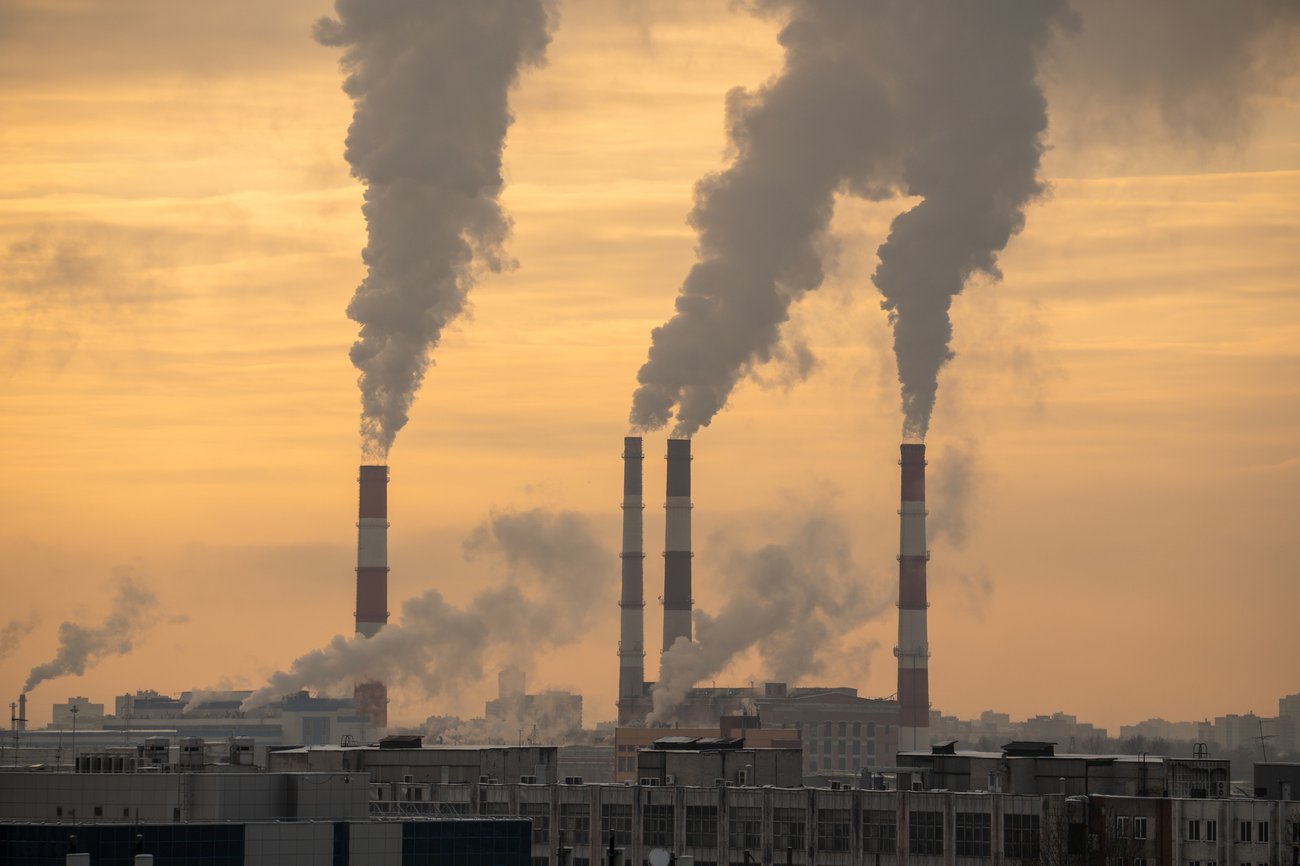 |
Smokestack pipes emitting CO2 from coal thermal power plant. Photo Credit: Getty Images / Dmitrii Marchenko |
|
Global reports underscore how far the world still is from stabilising global temperatures. The State of the Climate Report states that Earth’s “vital signs” are flashing red, noting that warming may be accelerating as declining air pollution reduces the planet’s reflectivity.
At the same time, the UN Emissions Gap Report warns that current policies put us on track for roughly 2.8°C of warming, well beyond the Paris 1.5°C goal, largely due to political resistance to phasing out fossil fuels and scaling up clean energy. Reduced momentum to cut emissions despite rising climate risks was also identified in the IEA’s 2025 World Energy Outlook.
Together, these warnings demands an honest, evidence-based discussion about how proceed – including whether and how SRM could help reduce near-term climate risks.
SRM off the agenda, but in side events at COP30
Although SRM didn’t appear on the main agenda at the UN Climate Change Conference in Brazil, a number of side events covered topics relevant to solar geoengineering: Cambridge Centre for Climate Repair hosted a conversation on marine cloud brightening and the Great Barrier Reef; GAYO and SilverLining convened a session on Global South voices in SRM Governance; and Ocean Visions led an event on responsible research and governance for climate interventions. Against the backdrop of these conversations, CCAN call for transparent, equitable research into SRM as “Plan B”. |
|
|
|
|
Community News and Events |
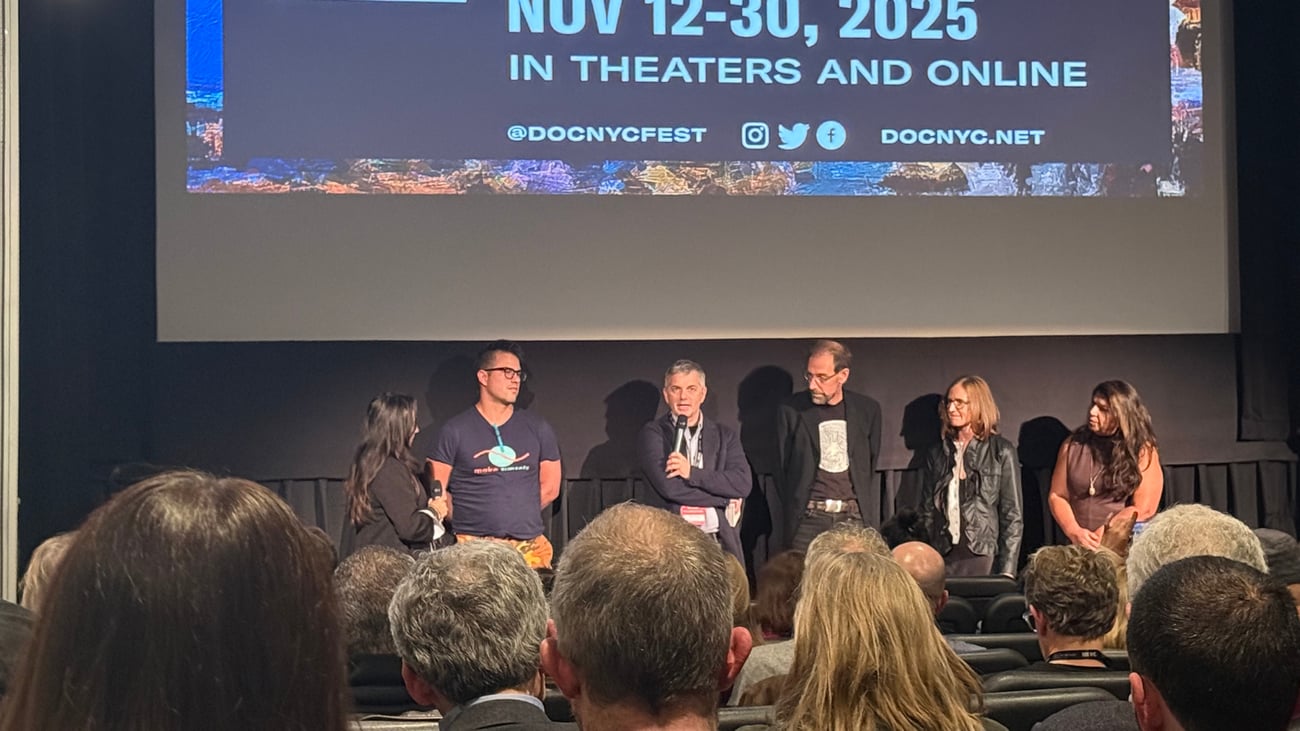 |
Filmmaker Ben Kalina introduces Plan C for Civilization at the DOC NYC film festival. Photo Credit: Kevin Harrison |
|
Degrees celebrates fifty published papers in the Global South
The Degrees Initiative, which funds solar geoengineering research in the Global South, reached the milestone of over 50 peer-reviewed publications published by their supported research teams. This research continues to help build scientific expertise in developing countries and ensures that they have independent, informed voices in international SRM discussions.
Spotlight on the risks tipping points pose to the Nordic region
Operaatio Arktis hosted the “ATLAS25” conference, focused on tipping-point risk and potential climate interventions. The event in Finland held sessions on risks to the Atlantic circulation (AMOC) and how that might affect the Nordic region, where Iceland recently classed the potential AMOC tipping point a national security risk. Featuring a “Think Corner” with James Hansen, the event gained media coverage across major Finnish outlets, including Helsingin Sanomat, Yle, MTV Uutiset, Hufvudstadsbladet, and New Story.
World premiere for solar geoengineering documentary
Plan C for Civilization, a feature-length documentary on solar geoengineering, premiered last week in New York. The film highlights the science, human stories, and open questions surrounding sunlight reflection methods, highlighting Harvard’s SCoPEx experiment and early balloon launches by Make Sunsets. |
| UPCOMING EVENTS |
|
|
In the Media |
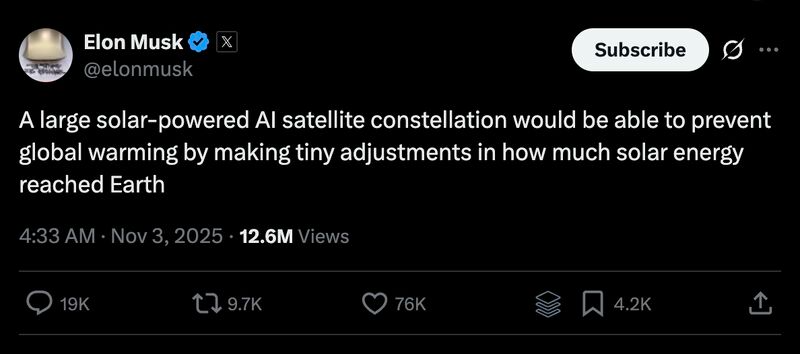 |
Elon Musk tweets about space-based SRM. Credit: X / Elon Musk |
|
Elon Musk tweet drives global coverage of solar geoengineering
A tweet by Elon Musk sparked worldwide conversation about SRM and AI, generating widespread news coverage. Over 350 articles, blogs, and social posts were published in English, Russian, German, Japanese, Chinese, French, Portuguese, Spanish, and Turkish languages. Sentiments were largely negative, focusing on the controversy, ethics, and risks of unilateral deployment.
Tucker Carlson boosts chemtrails conspiracy in two interviews
Tucker Carlson, former Fox News anchor, hosted two uncritical interviews with people who promote the chemtrails conspiracy in as many weeks, receiving over a million views on YouTube and mentions in over 27,000 posts on X. The interviews featured Peter Kirby, author of “Chemtrails Exposed” and Dane Wigington, who hosts the website GeoengineeringWatch.org and recently appeared as a witness in Wyoming as lawmakers discuss a draft bill asking Congress to ban geoengineering. |
|
|
|
|
|
SRM Academic Highlights |
 |
Mountain agriculture field in rainy season. Photo Credit: Getty Images / somnuk krobkum |
|
Will humanity become addicted to SRM?
Clark explores the comparison between SRM and opioids in a new article. She argues that short-term interests could drive a harmful dependence on SRM, with similarities to opioid use disorder.
SAI could reduce protein in crops
Clark et al. find that deploying stratospheric aerosol injection (SAI) to stabilise temperatures could decrease protein concentrations in maize and rice by a few percent, with some regions seeing much larger declines. The reason behind this is that elevated carbon dioxide levels reduce protein concentrations, while higher temperatures increase them, and so by offsetting only the effect of warming, SAI could lower crop protein levels.
Wine, coffee, chocolate, and SAI
In their study, Morrison et al. investigate how SAI could affect luxury crops. They find there are many trade-offs and the overall effect is unclear – regions are unlikely to see exclusively positive or negative changes in growing conditions.
Safeguarding the poles from misunderstanding
A recent high-profile article “Safeguarding the poles from dangerous geoengineering” concluded that no polar geoengineering proposal would be feasible, practical, or desirable. However, in a peer-reviewed commentary, Henry & Duffey correct two inaccuracies in the piece, showing that SAI would be effective in the polar winter, and that polar injections are not necessary to cool the poles. They also highlight the one-sided character of the original review, which failed to mention potential benefits of SAI or provide key context on its risks.
How to manage climate overshoot
With temperature targets increasingly likely to be overshot, Hyslop et al. lay out a framework to assess how climate risks change over time depending on the strategies used. Building on the “napkin diagram”, they present six illustrative scenarios showing how different approaches, including SRM, might limit the risks of climate overshoot.
Who might prioritise SRM over emissions cuts?
Sie et al. provide new insights into the concern that SRM could undermine emissions cuts by assessing which groups are more likely to prioritise SRM over reducing emissions. Their study of the US public found that this prioritisation is more common among non-white respondents, those with higher confidence in scientists, and those with conservative political beliefs.
|
|
|
 |
|
LinkedIn seems to be where our community digs into the most meaningful SRM conversations. Follow our updates and join the discussion there. |
|
|
|
Want even more SRM content?
Manage your subscription preferences.
Receive this newsletter from a friend and want it in your inbox?
Subscribe. |
|
|
| SHARE YOUR FEEDBACK |
|
|
 |
Copyright (C) 2025 SRM360. All rights reserved. |
|
|
|
|