|
|
|
September 2025 Update
Dear ,
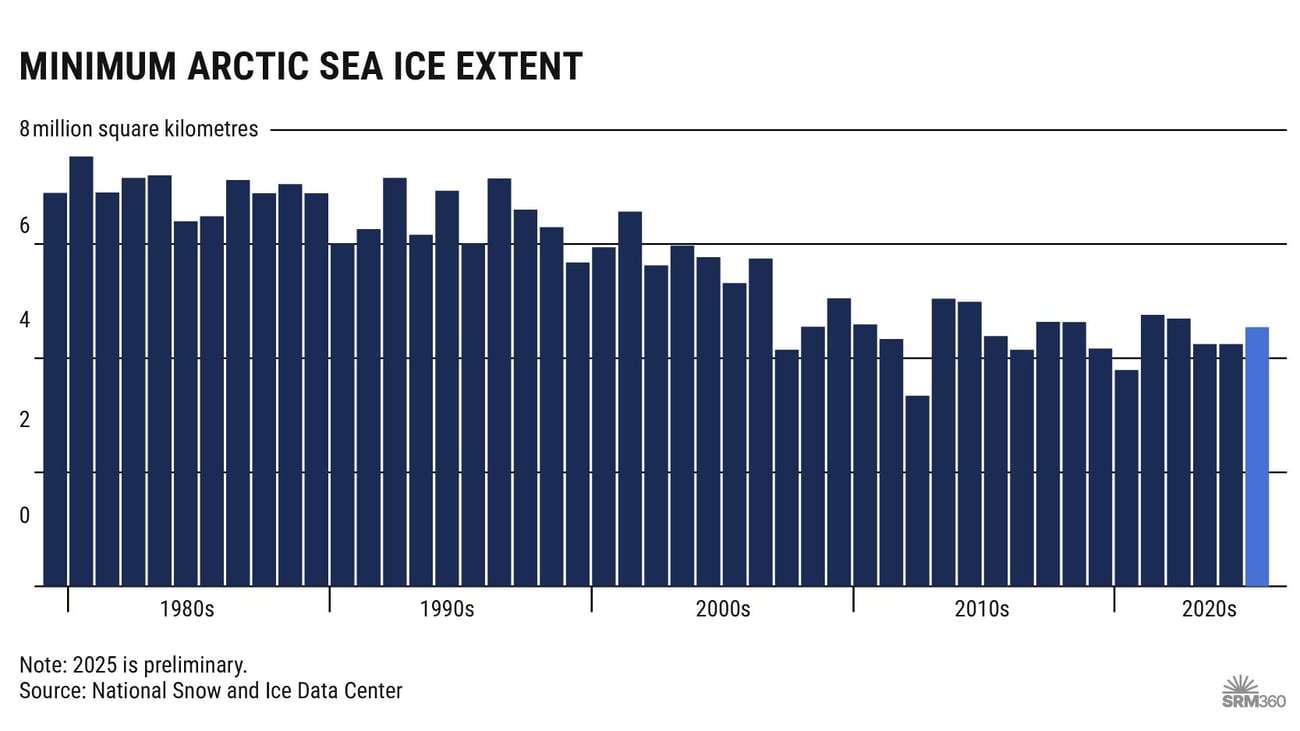
Could solar geoengineering protect the polar regions? This debate took centre stage this month, after a publication by Prof. Siegert and more than 40 other scientists claimed that no polar geoengineering approach is viable, and that further research would be a waste of resources. Close to 90 scientists contested their conclusions, signing an open letter calling for more research.
We invited six experts from both sides of the debate to comment in a News Reaction piece, and Pete Irvine, our editorial director, took on some of the core claims about stratospheric aerosol injection (SAI) in a new Perspective. Continuing the polar theme, we are hosting a live discussion on sea ice and solar geoengineering on 30 September, featuring John Moore, Cecilia Bitz, and Julius Lindi. Register today to join or receive the recording. Read on below for more special coverage on the polar geoengineering debate.
In other news, SRM was the subject of considerable conversation during New York Climate Week, the Brazilian government hosted a seminar on SRM (including a primer by us), and Zeke Hausfather and David Keith penned an opinion piece in the New York Times exploring a “more modest” deployment scenario.
-The SRM360 Team |
|
|
New From SRM360 |
|
|
|
 |
|
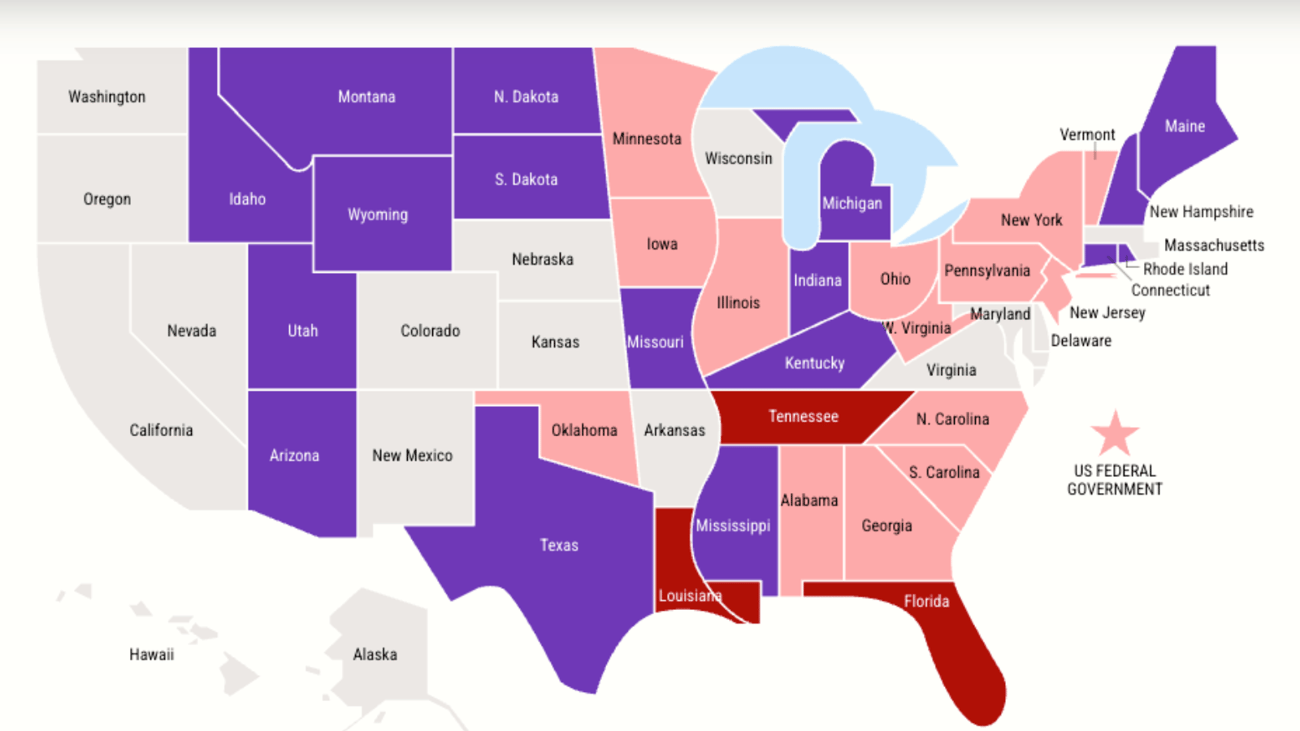
Since 2023, 76 bills to restrict geoengineering have been introduced across 34 US states. Only three have passed (Tennessee, Louisiana, Florida), while half have stalled or failed. But the debate is far from over, and it is increasingly moving to the federal level.
To help track these developments, SRM360 has launched the US Bans Tracker, a new tool mapping US state and federal efforts to restrict solar geoengineering. |
|
|
|
|
|
|
| MORE SRM360 CONTENT |
|
|
In Focus: Has Polar Geoengineering Been Debunked? |
 |
|
The case against polar geoengineering
Frontiers in Science published an article by Siegert et al. that reviewed several polar geoengineering proposals, including SAI, and concluded that all would be ineffective and dangerous, recommending against further research. This article was accompanied by several others, including pieces by Mike Hulme, supporting the article and highlighting the historical lessons of past interventions; John Moore et al., who contested the approach and conclusions of Siegert et al.; Sophie Crump, who stressed the need to involve Inuit perspectives; and Aarti Gupta, who argued for the need for a non-use agreement.
The lead article was widely covered by news outlets, including the BBC, the Guardian, Le Monde, Der Spiegel, and CNN.
Responses from the SRM community
In response to this study, an open letter – available on our website – signed by 88 scientists was published, arguing responsible research into these proposals is “part of building a toolkit” for managing climate risks.
Operaatio Arktis, a Finnish climate strategy agency, responded to the Frontiers paper with a letter that asks polar scientists to “engage with climate reality” and the need for further research. This perspective was echoed by Brad Ack (Ocean Visions), who advocated for “further research and exploration of all possible solutions to the crisis in our oceans and climate”.
In the latest episode of the Beyond the Ice podcast, Prof. Dame Jane Francis, Director of British Antarctic Survey, delved into why geoengineering is entering the conversation and the urgent need to ensure the potential impacts of these technologies are fully assessed.
We invited six experts from both sides of the debate to comment in an SRM360 News Reaction.
No, Polar geoengineering has not been debunked
In a new Perspective piece, Pete Irvine, SRM360’s editorial director, reviews some of the key claims made in the polar geoengineering article, focusing on SAI. He highlights several false or misleading claims and pushes back on the authors’ core claim that mitigation is happening fast enough that the world can safely ignore polar geoengineering. |
|
|
|
|
|
|
Community News and Events |
 |
SRM gained attention at NY Climate Week. Credit: Getty Images / William87 |
|
SRM at New York Climate Week
Across panels and side events, SRM was treated as a serious – if contentious – part of the climate response. Highlights included: EDF's panel on the state of SRM and the need for responsible research, DSG and CCAN's discussion around next steps for civil society, and Healthy Climate Initiative's nature-inspired interventions to cool the planet and rekindle hope.
Indian perspectives on geoengineering science, governance, and risks
The President of the Centre for Social and Economic Progress urged India to invest in strategic research during a workshop held in collaboration with NITI Aayog and the Council on Energy, Environment and Water.
Brazil workshop explores SRM ahead of COP30
The Brazilian Ministry of Science, Technology, and Innovation hosted a seminar, supported by the Climate and Society Institute (iCS) and SRM360, that brought together national and international researchers and policy stakeholders. According to iCS, the seminar aimed to highlight the need for transparency and regulation of research in this field. Read the SRM360 primer or watch the recording.
An uncertainty database for SAI
Reflective is seeking feedback from scientists on a preliminary uncertainty database for SAI, which aims to assess the magnitude and consequences of physical uncertainties, and how those uncertainties relate to near-term research activities and risks.
SRM: A growing professional community
Two exciting new roles demonstrate the continued growth of the field: The Degrees Initiative is seeking a Policy Engagement Manager Asia, and ARIA seeks a Communications & Engagement Lead: Future Proofing our Climate & Weather. |
| UPCOMING EVENTS |
|
|
In the Media |
 |
Could SRM compensate for additional warming as air pollution falls?. Getty Images. Photo Credit: Alexander Spatari |
|
Tying SRM to pollution reduction
In a new opinion piece published by the New York Times, Zeke Hausfather and David Keith explore whether SRM might be deployed not as a means to attain a preferred temperature, but as a more limited measure to compensate for additional warming as air pollution falls. The idea is discussed further by Dan Miller and Leon Simons in a recent “Climate Chat” podcast. Meanwhile, Madeline Cuff (New Scientist) asks if cleaning up air pollution has previewed what “termination shock” could look like.
Congressional subcommittee hears testimonies on SRM
The US Oversight Subcommittee on Delivering on Government Efficiency, led by Republican Marjorie Taylor Greene, held a hearing to review solar geoengineering and weather modification. With experts responding to committee member questions, the hearing was described by WIRED as “a nest of conspiracy theorising”, with ABC News fact-checking some of the claims.
Insurers consider SRM risks
An insurance industry article discussed the potential financial implications and liabilities of deploying SRM – and what role insurance could play in covering possible unintended consequences, including disruptions to rainfall patterns and monsoons, regional droughts, or rapid temperature spikes if SAI were to stop suddenly. |
|
|
|
|
|
SRM Academic Highlights |
 |
Getty Images. Photo Credit: zhihao |
|
Could SAI prevent AMOC decline?
The Atlantic Meridional Overturning Circulation (AMOC) – a system of ocean currents that transports heat from the tropical Atlantic north to Europe – is weakening due to climate change. A recent study by Bednarz et al. finds that SAI could restore the AMOC, though its effectiveness would depend on how it is deployed.
Moral hazard or clarion call?
Antoan et al. investigate the impact of SRM awareness on public support for emissions cuts. Like several previous studies, they find that sharing balanced information about SRM has little overall effect, and it may increase support among initially less supportive groups.
A call for African leadership on SRM
In their Comment article, Quagraine et al. note that Africa remains underrepresented in the field of SRM. They stress that Africa must become an active leader in SRM research, governance, and public engagement to ensure developments are just and aligned with local priorities.
A new design for MCB sprayers
The engineering challenge of developing an effective sprayer is a significant barrier for marine cloud brightening (MCB). Harrison et al. present a design for an improved nozzle for outdoor experimentation, but it is far from efficient enough to be used for large-scale deployment.
A fragmented governance landscape
Ruddigkeit et al. explore the governance challenges of SRM and how existing frameworks could address them. They challenge the notion of gaps in SRM governance and point instead to a fragmented web of institutions and rules that could support restrictive governance of SRM. |
|
|
Join Us on Social Media |
|
|
|
|
|
Want even more SRM content?
Manage your subscription preferences.
Receive this newsletter from a friend and want it in your inbox?
Subscribe. |
|
|
| SHARE YOUR FEEDBACK |
|
|
 |
Copyright (C) 2025 SRM360. All rights reserved. |
|
|