|
|
|
October 2025 Update
Dear ,
Two thirds of IPCC scientists surveyed by New Scientist expect an attempt to deploy SRM this century. One in five respondents said deployment should be considered if global warming is certain to exceed 2°C, and eighty percent said the world needs a new international treaty or convention to govern SRM.
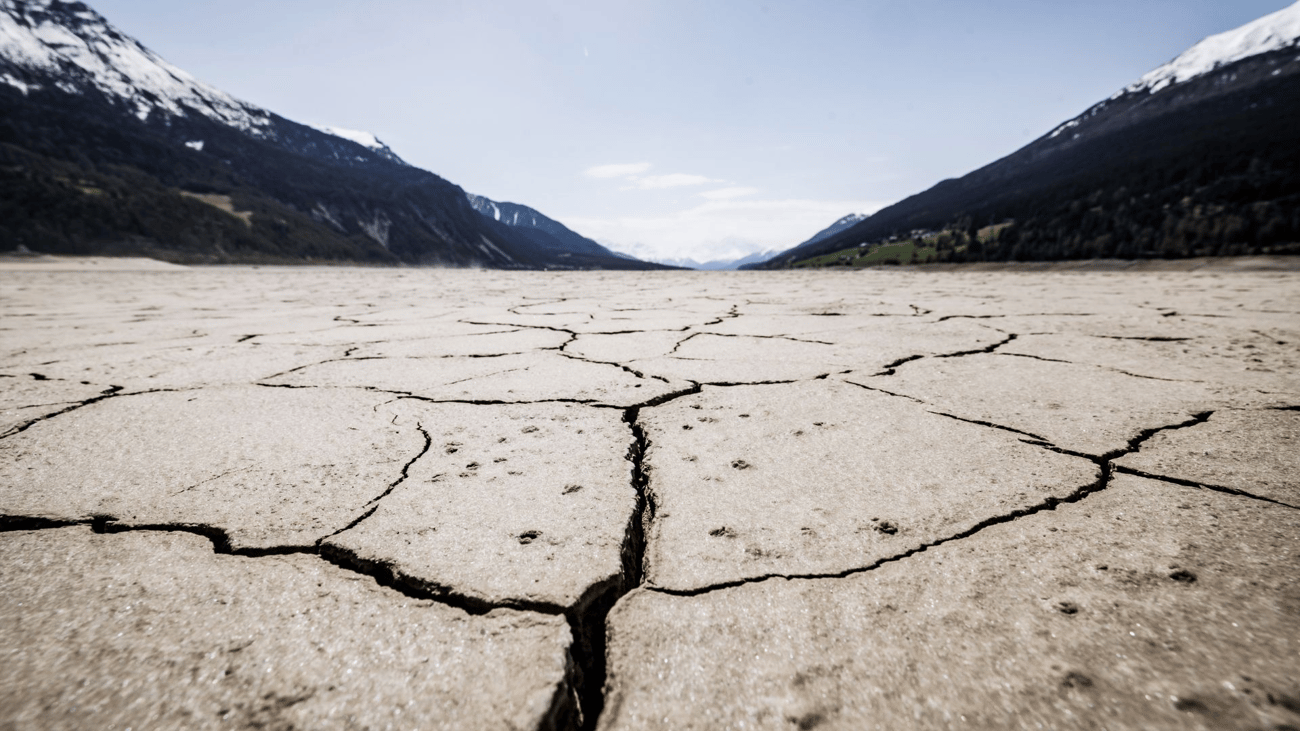
Meanwhile, the Global Tipping Points Report 2025 warned that several ecosystems may be nearing irreversible tipping points – where gradual changes give way to abrupt and lasting transformation. This month, we take a closer look at these emerging risks, how the loss of Arctic sea ice is reshaping climate systems, and whether SRM could play a role in limiting the threat to critical ecosystems like the Amazon.
Join us on 28 October for a live discussion: Could Solar Geoengineering Help or Harm the Amazon? Register today.
-The SRM360 Team |
|
|
New From SRM360 |
|
|
|
 |
|
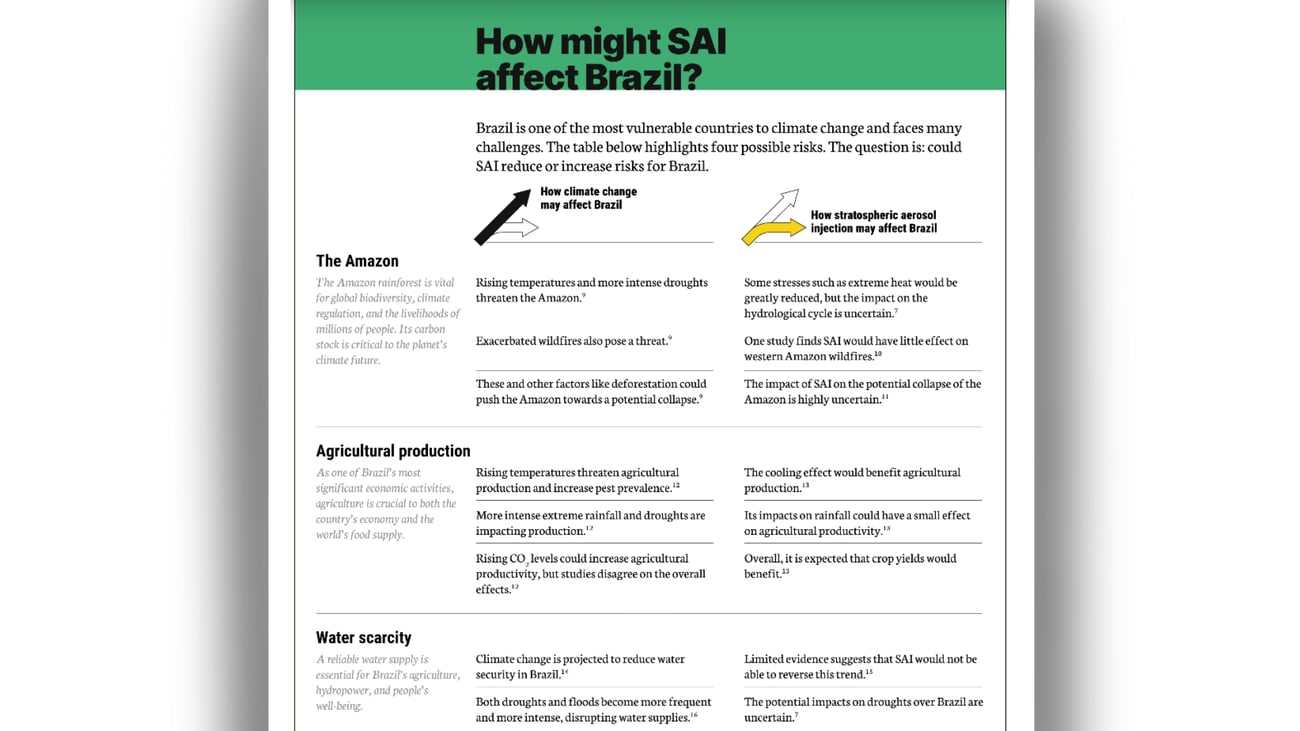
How could SRM influence Brazil’s climate risks? We collaborated with the Climate and Society Institute (iCS) to produce a primer that informed a national seminar with Brazilian experts, policymakers, and civil society leaders, discussing SRM science, governance, and ethics. |
|
|
|
|
| MORE SRM360 CONTENT |
|
|
In Focus: Nature at a Tipping Point |
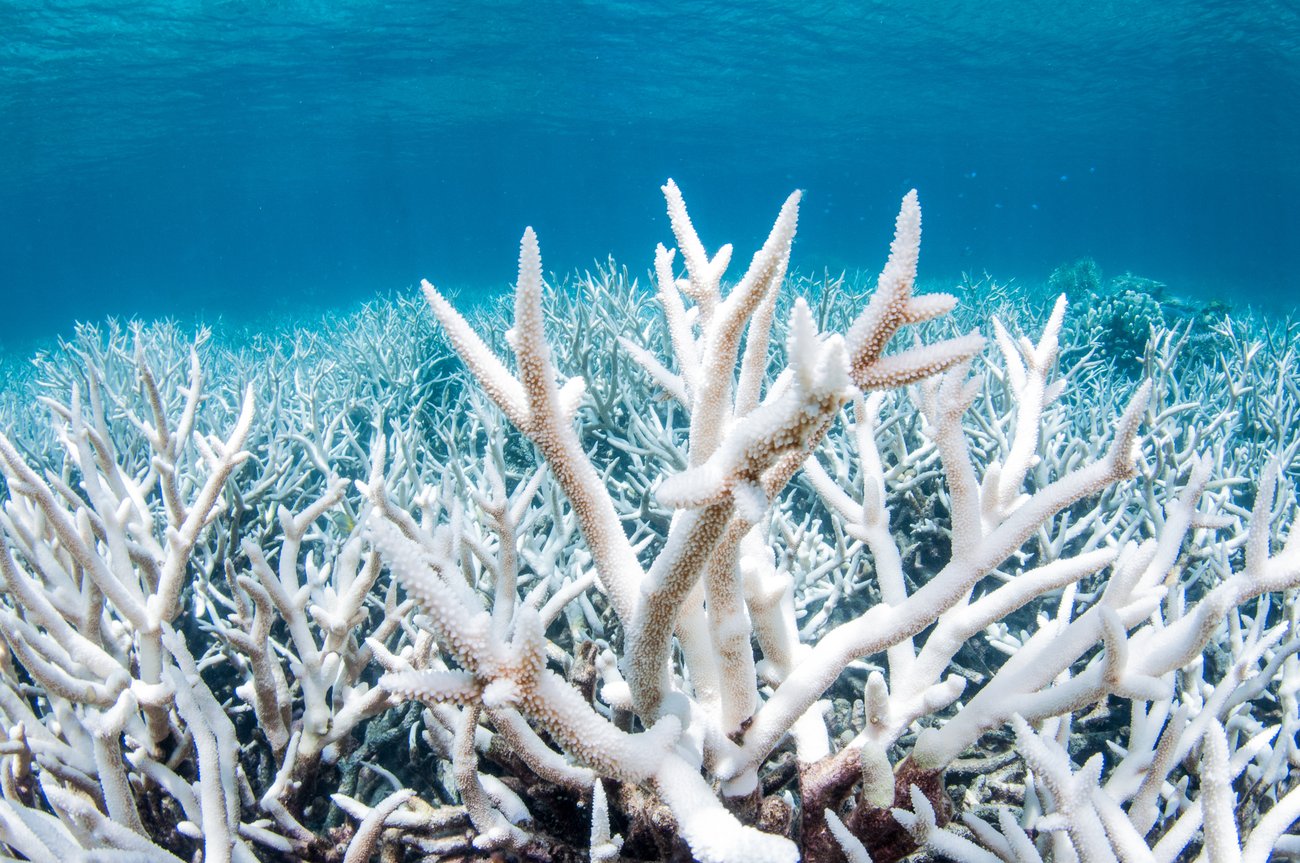 |
Bleached coral on the Great Barrier Reef. Photo Credit: Getty Images / Brett Monroe Garner |
|
Climate change is pushing ecosystems toward critical thresholds – and SRM research is beginning to explore how sunlight reflection might interact with these fragile systems.
Tipping Points Report gives limited attention to SRM but recommends further research
The 2025 Global Tipping Points Report highlighted the risks of key earth system elements like ice sheets and ocean currents destabilising and concluded that coral reefs had already crossed a tipping point. With only 1 page of 380 devoted to SRM, they recommend “a moratorium on SRM deployment and large-scale experiments, alongside rigorous international research to assess both its risks and potential benefits”.
Overshoot Podcast: Life Beyond 1.5°C
The new Overshoot podcast explores potential effects if the world exceeds 1.5°C of warming – and what comes next. Hosted by experts from the University of Exeter, the series tackles topics from carbon removal technologies to politics, psychology, and climate denial in an overheated world.
IUCN to develop policy on geoengineering
The International Union for Conservation of Nature (IUCN) adopted a motion calling for a draft global policy on geoengineering before its 2029 Congress. The motion urges governments to avoid unproven or unregulated interventions such as SRM, emphasising that they must not replace emissions cuts. This follows the 2025 update of the IUCN Red list for endangered species, that highlights “keystone species” affected by the loss of Arctic sea ice amongst key climate impacts. |
|
|
|
|
Community News and Events |
 |
SRM360 Expert Contributor Romaric Odoulami among Forbes 2025 Sustainability Leaders. Photo Credit: Romaric Odoulami. |
|
Cape Town SRM researcher celebrated as a climate changemaker
SRM360 Expert Contributor Dr Romaric C. Odoulami from the University of Cape Town has been recognised on the 2025 Forbes Sustainability Leaders list. The annual list profiles 50 people around the world who are driving practical and influential responses to the climate crisis. Romaric’s work examines how SRM could affect African weather systems, and he leads efforts to build African research capacity through the African Climate Intervention Research Hub (ACIRH).
CIEL report claims marine geoengineering threatens ocean basins
A new report by the Center for International Environmental Law (CIEL) suggests that ocean-based geoengineering schemes – like marine cloud brightening or ocean alkalinity enhancement – could pose serious risks to marine life and human rights. The authors argue these projects distract from cutting fossil fuels and may harm coastal and Indigenous communities.
Should Europe lead on SRM research?
Euractiv’s Brussels workshop, “Grappling with accelerating climate risks: Is it time to explore research into Solar Radiation Modification?”, brought together scientists and policymakers to debate whether the EU should fund public research into SRM. Supported by Centre for Future Generations, the event discussed potential governance approaches and safeguards for research. Speakers suggested that Europe should build capacity to understand and regulate SRM through transparent, internationally coordinated research, without diverting focus or funds from urgent mitigation and adaptation.
Reflective awards funding for stratospheric aerosol injection (SAI) research
Reflective has announced the grantees for the “Impacts and Tradeoffs of Simulated High-Latitude/Low-Altitude SAI Deployment” funding opportunity. The projects aim to improve global models and inform future risk-benefit assessments.
Healthy Climate Initiative short film
The Healthy Climate Initiative: Regenerating Our Future short film invites viewers to reflect on the choices, trade-offs, and ethical dilemmas behind geoengineering through storytelling from the perspective of “scientists, communities, and young leaders working together to cool the planet, restore ecosystems, and inspire collective action”. |
| UPCOMING EVENTS |
|
|
In the Media |
 |
Contrails over blue sky. Photo Credit: Getty Images / Gajus |
|
IPCC scientists expect SRM deployment attempt this century
The New Scientist published a survey of IPCC scientists' views on SRM, finding two thirds thought large-scale SRM deployment would be attempted this century. The survey found that 45% of researchers thought SRM is still a controversial or taboo field of research, and 11% of researchers said they have avoided the topic to protect their professional reputation. The survey also touched on researchers' key concerns and views on field experiments, among other topics.
Read our perspective and chime in with your thoughts on LinkedIn.
US Health and Human Services to Investigate “Chemtrails”
Secretary Robert F. Kennedy Jr. is planning to investigate climate and weather control, and is expected to create a task force that will recommend possible federal action, according to an internal memo cited by CNN. Meanwhile, Republican Marjorie Taylor Greene claims the ongoing government shutdown has had a benefit in halting “taxpayer-funded weather modification experiments”, linking her claims that government experiments are otherwise taking place to the proposed Clear Skies Act that would ban SRM. This follows the recent Florida state ban of geoengineering, which has since come into enforcement with airports actively checking aircraft.
Project Drawdown assess SAI as too risky in new climate solutions analysis
Project Drawdown launched a new Explorer Tool evaluating a wide range of climate solutions, recommending some and rejecting others. SAI was “not recommended”, though the assessment does not weigh its risks against the risks of climate change. The tool does not include assessment of other SRM approaches – such as marine cloud brightening – at this stage. |
|
|
|
|
|
SRM Academic Highlights |
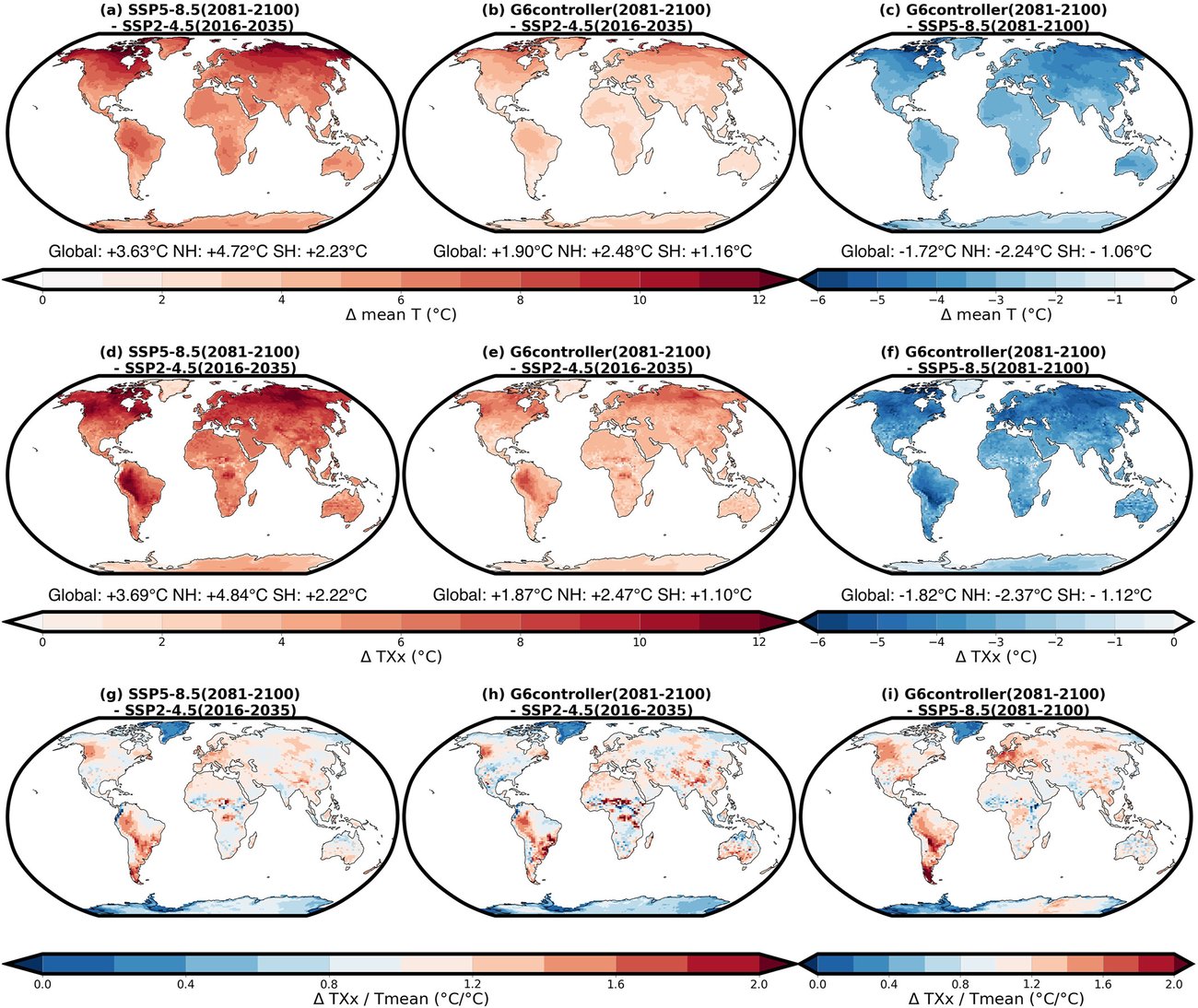 |
A new study from Wells and Haywood compares the effects of SAI and global warming on key climate risks . Photo Credit: AGU / Wells and Haywood. |
|
The practical barriers to SAI
Hack et al. consider the engineering and logistical obstacles facing SAI deployment. They highlight concerns including possible supply chain constraints and technical challenges, such as how to spray particles of the right size, and evaluate how these could affect the risks of SAI deployment.
How would SAI affect Africa?
In their study, Kumi et al. find that SAI could offset most of the projected warming across Africa. However, SAI overcompensated for the projected increases in rainfall under climate change, reducing flood risks but increasing water scarcity.
A risk assessment of climate extremes
Wells and Haywood explore how the effects of SAI compare to a pessimistic climate change scenario. Through climate model simulations, they find that SAI reduced extreme heat, precipitation changes, and wildfire risks.
Could SAI deployment be kept secret?
Lange et al. investigate whether injections of sulphur – the most studied material for SAI – into the upper atmosphere would be detectable at a rate roughly 10% of what would be needed to cool the planet by 1°C. They conclude that current sensors would be able to detect these injections after a month. |
|
|
 |
|
We’re focusing our social media efforts on LinkedIn, where we’ve found the most engagement and conversation around SRM.
Follow our updates and join the discussion there. |
|
|
|
Want even more SRM content?
Manage your subscription preferences.
Receive this newsletter from a friend and want it in your inbox?
Subscribe. |
|
|
| SHARE YOUR FEEDBACK |
|
|
 |
Copyright (C) 2025 SRM360. All rights reserved. |
|
|