Accelerating climate risks
AMOC concerns grow
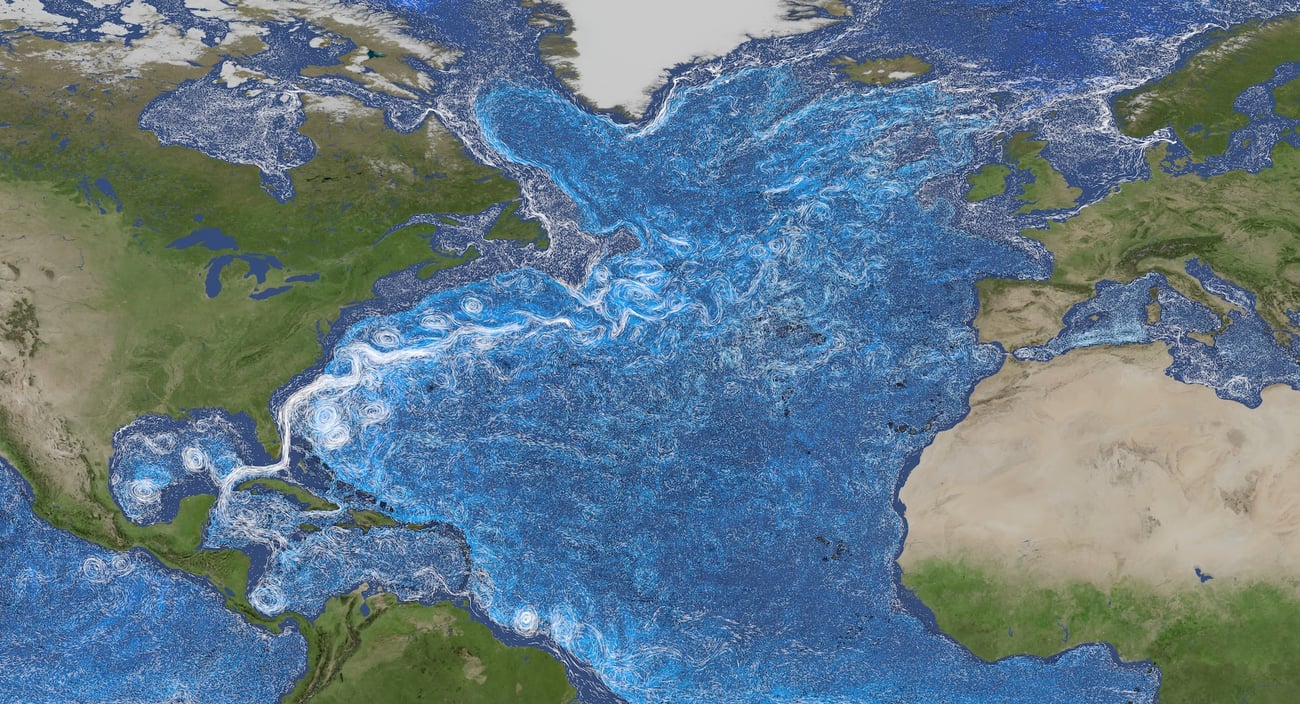
Concerns around the Atlantic Meridional Overturning Circulation (AMOC) continue to grow. Models suggest that a shift in the Gulf Stream could signal a forthcoming AMOC collapse. However, there is uncertainty about the likelihood and timing of a full collapse, with another study suggesting the overturning circulation may remain more resilient even under extreme climate scenarios.
Warming speeds up
Global temperatures in February reached around 1.49°C above pre-industrial levels, following a reported acceleration in the rate of warming – a new study indicates that the pace of warming has nearly doubled since 2015.
Why is this increase occurring? One factor may be declining aerosol pollution. Research indicates that a reduction in atmospheric aerosols is allowing more sunlight to reach Earth’s surface. Yu et al. recently explored whether marine cloud brightening in four ocean regions could offset this unmasked warming, finding that its effectiveness varies by region, with some areas over-cooled and others under-cooled, while also affecting rainfall patterns.
An expanding conversation
Two of the largest environmental nonprofits furthered the SRM conversation in recent weeks. The Natural Resources Defense Council (NRDC) outlined why it believes engaging in the debate is necessary despite risks in a post titled, "Ignorance Is Not an Option". And the Environmental Defense Fund announced the first grants under its SRM research programme, aimed at understanding potential impacts of stratospheric aerosol injection (SAI) on ecosystems, agriculture and the availability of water.
New governance initiatives are also emerging. NRDC’s commentary followed its joint announcement of a forthcoming governance framework alongside the Alliance for Just Deliberation on Solar Geoengineering (DSG), the Council on Energy, Environment and Water (CEEW), and the American Geophysical Union (AGU). The Solar Geoengineering Research Governance Platform (SGRG) aims “to make solar geoengineering research more transparent, publicly legible, and accountable”.
A recent panel hosted by the Arctic Circle forum discussed climate interventions, including SRM, highlighting both potential research pathways and major concerns around governance, ethics, and the rights and consent of affected communities, particularly Indigenous peoples.
The African Climate Intervention Research Hub (ACIRH) held a workshop in Ghana to discuss African capacity building to engage with research and policy discussions.
And Australia announced a pledge to support climate-resilient coral reef research and restoration, including cooling and shading approaches, and encouraged other countries to join.
SRM funding continues to grow
This growing engagement is also reflected in an expanding set of SRM funders. The Heinrich Böll Foundation released an analysis that details this funding activity – reflecting many of the insights highlighted in the analysis we published last year. Explore our Funding Tracker to learn more. We’ll be updating our database with 2025 data in the coming months.
Does “Atmospheric Monitoring” lay the groundwork for SRM governance?
A new report by the American Council for Capital Formation, a centre-right US think tank, argues that the United States should lead research and governance of solar geoengineering to avoid a strategic disadvantage or security threats from geopolitical rivals. This follows the joint publication of a policy brief by SilverLining and the Rainey Center that suggests the US should expand monitoring systems in order to reliably detect, assess and respond to potential large-scale interventions and protect US "weather sovereignty".
At the same time, the Environmental Defense Fund warned that cuts to atmospheric research infrastructure could weaken national preparedness for extreme weather, while the US Government Accountability Office (GAO) recommended stronger NOAA oversight of potential weather modification. According to the GAO, solar geoengineering is legally classified as weather modification under the Weather Modification Reporting Act of 1972, meaning NOAA is currently the only federal agency with a statutory oversight role covering SRM activities.
Meanwhile, Congress advanced the Weather Research and Forecasting Innovation Reauthorization Act of 2026, reauthorising atmospheric programmes and supporting improved monitoring. Concern about atmospheric intervention is also reflected in new legislative proposals, including a federal bill that would prohibit weather modification activities within the United States.
Research progresses |